
From this episode
Recommended books
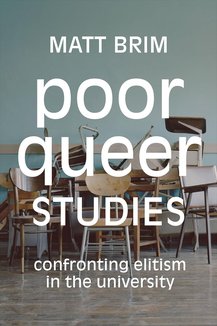
Poor Queer Studies: Confronting Elitism in the University
Author:
Matt Brim
In Poor Queer Studies Matt Brim shifts queer studies away from its familiar sites of elite education toward poor and working-class people, places, and pedagogies. Brim shows how queer studies also takes place beyond the halls of flagship institutions: in night school; after a three-hour commute; in overflowing classrooms at no-name colleges; with no research budget; without access to decent food; with kids in tow; in a state of homelessness.
In Poor Queer Studies Matt Brim shifts queer studies away from its familiar sites of elite education toward poor and working-class people, places, and pedagogies. Brim shows how queer studies also takes place beyond the halls of flagship institutions: in night school; after a three-hour commute; in overflowing classrooms at no-name colleges; with no research budget; without access to decent food; with kids in tow; in a state of homelessness. Drawing on the everyday experiences of teaching and learning queer studies at the College of Staten Island, Brim outlines the ways the field has been driven by the material and intellectual resources of those institutions that neglect and rarely serve poor and minority students. By exploring poor and working-class queer ideas and laying bare the structural and disciplinary mechanisms of inequality that suppress them, Brim jumpstarts a queer-class knowledge project committed to anti-elitist and anti-racist education. Poor Queer Studies is essential for all of those who care about the state of higher education and building a more equitable academy.
Find this book on:


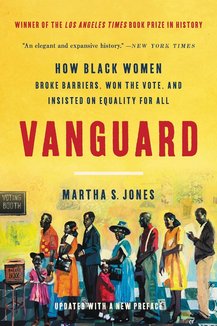
Vanguard
Author:
Martha S. Jones
“An elegant and expansive history” ( New York Times ) of African American women’s pursuit of political power—and how it transformed America In Vanguard , acclaimed historian Martha S. Jones offers a new history of African American women’s political lives in America.
“An elegant and expansive history” ( New York Times ) of African American women’s pursuit of political power—and how it transformed America In Vanguard , acclaimed historian Martha S. Jones offers a new history of African American women’s political lives in America. She recounts how they defied both racism and sexism to fight for the ballot, and how they wielded political power to secure the equality and dignity of all persons. From the earliest days of the republic to the passage of the 1965 Voting Rights Act and beyond, Jones excavates the lives and work of Black women—Maria Stewart, Frances Ellen Watkins Harper, Fannie Lou Hamer, and more—who were the vanguard of women’s rights, calling on America to realize its best ideals. Now revised to discuss the election of Vice President Kamala Harris and the vital contributions of Black women in the 2020 elections, Vanguard is essential reading for anyone who cares about the past and future of American democracy.
Find this book on:
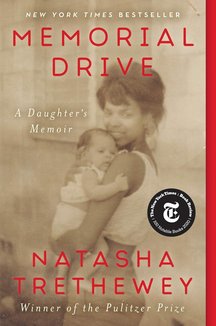
Memorial Drive: A Daughter's Memoir
Author:
Natasha Trethewey
An Instant New York Times Bestseller A New York Times Notable Book One of Barack Obama's Favorite Books of 2020 Named One of the Best Books of the Year by: The Washington Post, NPR, Shelf Awareness , Esquire , Electric Literature , Slate , The Los Angeles Times , USA Today , and InStyle A chillingly personal and exquisitely wrought memoir of a daughter reckoning with the brutal murder of her mother at the hands of her former stepfather, and the moving, intimate story of a poet coming into her own in the wake of a tragedy At age nineteen, Natasha Trethewey had her world turned upside down when her former stepfather shot and killed her mother. Grieving and still new to adulthood, she confronted the twin pulls of life and death in the aftermath of unimaginable trauma and now explores the way this experience lastingly shaped the artist she became.
An Instant New York Times Bestseller A New York Times Notable Book One of Barack Obama's Favorite Books of 2020 Named One of the Best Books of the Year by: The Washington Post, NPR, Shelf Awareness , Esquire , Electric Literature , Slate , The Los Angeles Times , USA Today , and InStyle A chillingly personal and exquisitely wrought memoir of a daughter reckoning with the brutal murder of her mother at the hands of her former stepfather, and the moving, intimate story of a poet coming into her own in the wake of a tragedy At age nineteen, Natasha Trethewey had her world turned upside down when her former stepfather shot and killed her mother. Grieving and still new to adulthood, she confronted the twin pulls of life and death in the aftermath of unimaginable trauma and now explores the way this experience lastingly shaped the artist she became. With penetrating insight and a searing voice that moves from the wrenching to the elegiac, Pulitzer Prize–winning poet Natasha Trethewey explores this profound experience of pain, loss, and grief as an entry point into understanding the tragic course of her mother’s life and the way her own life has been shaped by a legacy of fierce love and resilience. Moving through her mother’s history in the deeply segregated South and through her own girlhood as a “child of miscegenation” in Mississippi, Trethewey plumbs her sense of dislocation and displacement in the lead-up to the harrowing crime that took place on Memorial Drive in Atlanta in 1985. Memorial Drive is a compelling and searching look at a shared human experience of sudden loss and absence but also a piercing glimpse at the enduring ripple effects of white racism and domestic abuse. Animated by unforgettable prose and inflected by a poet’s attention to language, this is a luminous, urgent, and visceral memoir from one of our most important contemporary writers and thinkers.
Find this book on:
Episode overview
Sarah Schulman’s work — as a nonfiction writer, novelist, activist, playwright and filmmaker — confronts the very thing most people try to avoid: conflict. Schulman, far from running from it, believes we need more of it.
This was true in Schulman’s 2016 book, “Conflict Is Not Abuse,” which argues that people often mislabel conflict as abuse without recognizing the power that they have to potentially abuse others. Viewing oneself as a victim can be one way to earn compassion. But powerful groups often use their perceived victimhood as an excuse to harm those who are more vulnerable. And more individually, people often don’t see when they have power, and they often fear or dodge the work of repair. It’s a challenging and prescient book, with a deep faith in the healing power of not just communication, but of collision.
Schulman’s latest book, “Let the Record Show,” is a history of ACT UP New York, the direct-action group that reshaped AIDS activism in the late ’80s and early ’90s. It’s a book about necessary conflicts: between the AIDS community and the U.S. government, and between queer people and a widely homophobic society. But it’s also about conflict among people who generally agree with one another and are working toward a common goal. Schulman calls the book “a political history,” but it’s also a work of political theory: a proposal for how social movements can become more effective by embracing dissensus rather than striving for consensus.
We began this conversation discussing ACT UP, conflict and Schulman’s theory of political change. But we also ended up discussing Israel and Palestine, a topic she has written widely about. And Schulman shares her thoughts on contemporary L.G.B.T.Q. politics and what she thinks has been lost as queer culture has become more mainstream.
Mentioned in this episode:
Let the Record Show: A Political History of ACT UP New York, 1987-1993 by Sarah Schulman
Conflict Is Not Abuse: Overstating Harm, Community Responsibility, and the Duty of Repair by Sarah Schulman