From this episode
Recommended books
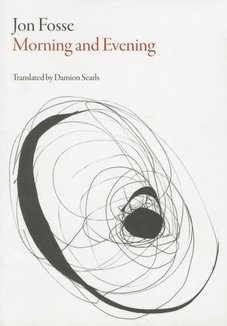
Morning and Evening (Norwegian Literature)
Authors:
Jon Fosse,
Damion Searls
A child who will be named Johannes is born. An old man named Johannes dies.
A child who will be named Johannes is born. An old man named Johannes dies. Between these two points, Jon Fosse gives us the details of an entire life, starkly compressed. Beginning with Johannes's father's thoughts as his wife goes into labor, and ending with Johannes's own thoughts as he embarks upon a day in his life when everything is exactly the same, yet totally different, Morning and Evening is a novel concerning the beautiful dream that our lives have meaning.
Find this book on:

WINNER OF THE 2017 NATIONAL BOOK AWARD IN NONFICTION FINALIST FOR THE NATIONAL BOOK CRITICS CIRCLE AWARDS WINNER OF THE NEW YORK PUBLIC LIBRARY'S HELEN BERNSTEIN BOOK AWARD NAMED A BEST BOOK OF 2017 BY THE NEW YORK TIMES BOOK REVIEW , LOS ANGELES TIMES , WASHINGTON POST , BOSTON GLOBE , SEATTLE TIMES , CHRISTIAN SCIENCE MONITOR , NEWSWEEK, PASTE , and POP SUGAR The essential journalist and bestselling biographer of Vladimir Putin reveals how, in the space of a generation, Russia surrendered to a more virulent and invincible new strain of autocracy. Award-winning journalist Masha Gessen's understanding of the events and forces that have wracked Russia in recent times is unparalleled.
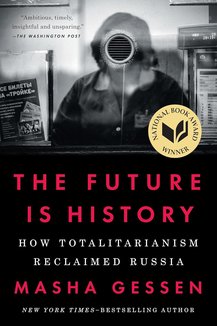
WINNER OF THE 2017 NATIONAL BOOK AWARD IN NONFICTION FINALIST FOR THE NATIONAL BOOK CRITICS CIRCLE AWARDS WINNER OF THE NEW YORK PUBLIC LIBRARY'S HELEN BERNSTEIN BOOK AWARD NAMED A BEST BOOK OF 2017 BY THE NEW YORK TIMES BOOK REVIEW , LOS ANGELES TIMES , WASHINGTON POST , BOSTON GLOBE , SEATTLE TIMES , CHRISTIAN SCIENCE MONITOR , NEWSWEEK, PASTE , and POP SUGAR The essential journalist and bestselling biographer of Vladimir Putin reveals how, in the space of a generation, Russia surrendered to a more virulent and invincible new strain of autocracy. Award-winning journalist Masha Gessen's understanding of the events and forces that have wracked Russia in recent times is unparalleled. In The Future Is History, Gessen follows the lives of four people born at what promised to be the dawn of democracy. Each of them came of age with unprecedented expectations, some as the children and grandchildren of the very architects of the new Russia, each with newfound aspirations of their own--as entrepreneurs, activists, thinkers, and writers, sexual and social beings. Gessen charts their paths against the machinations of the regime that would crush them all, and against the war it waged on understanding itself, which ensured the unobstructed reemergence of the old Soviet order in the form of today's terrifying and seemingly unstoppable mafia state. Powerful and urgent, The Future Is History is a cautionary tale for our time and for all time.
Find this book on:

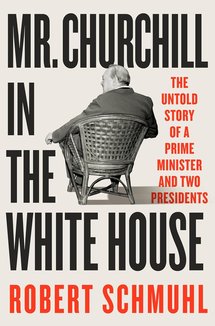
Mr. Churchill in the White House: The Untold Story of a Prime Minister and Two Presidents
Author:
Robert Schmuhl
“Robert Schmuhl admirably captures the vitality and cunning of Churchill’s D.C. residency with consummate skill, colorful anecdotes, and crisp historical analysis.” ―Douglas Brinkley Well into the twenty-first century, Winston Churchill continues to be the subject of scores of books.
“Robert Schmuhl admirably captures the vitality and cunning of Churchill’s D.C. residency with consummate skill, colorful anecdotes, and crisp historical analysis.” ―Douglas Brinkley Well into the twenty-first century, Winston Churchill continues to be the subject of scores of books. Biographers portray him as a soldier, statesman, writer, painter, and even a daredevil, but Robert Schmuhl, the noted author and journalist, may be the first to depict him as a demanding, indeed exhausting White House guest. For the British prime minister, America’s most famous residence was “the summit of the United States,” and staying weeks on end with the president as host enhanced his global influence and prestige, yet what makes Churchill’s sojourns so remarkable are their duration at critical moments in twentieth-century history. From his first visit in 1941 to his last one eighteen years later, Churchill made himself at home in the White House, seeking to disprove Benjamin Franklin’s adage that guests, like fish, smell after three days. When obliged to be attired, Churchill shuffled about in velvet slippers and a tailored-for-air-raids “siren suit,” resembling a romper. In retrospect, these extended stays at 1600 Pennsylvania Avenue take on a new level of diplomatic and military significance. Just imagine, for example, Ukraine’s president Volodymyr Zelensky spending weeks at America’s most powerful address, discussing war strategy and access to weaponry, as Churchill did during the 1940s. Drawing on years of research, Schmuhl not only contextualizes the unprecedented time Churchill and President Franklin D. Roosevelt spent together between 1941 and 1945, but he also depicts the individual figures involved: from Churchill himself to “General Ike,” as he affectionately called Dwight D. Eisenhower, to Harry Truman, and not to mention the formidable Eleanor Roosevelt, who resented Churchill’s presence in the White House and wanted him to occupy the nearby Blair House instead (which, predictably, he did not do). Mr. Churchill in the White House presents a new perspective on the politician, war leader, and author through his intimate involvement with one Democratic and one Republican president during his two terms as prime minister. Indeed, Churchill had his own “Special Relationship” with these two presidents. Diaries, letters, government documents, and memoirs supply the archival foundation and color for each Churchill visit, providing a wholly novel perspective on one of history’s most perplexing and many-faceted figures. 25 black-and-white illustrations throughout
Find this book on:
Episode overview
America has become increasingly polarized when it comes to trust. Voters who distrust the system — who see institutions as corrupt and are prone to conspiracy theories — have long existed on the far left and far right. But Donald Trump seems to have sparked a realignment, what the writer Matthew Yglesias calls “the crank realignment.” The G.O.P. is now the political home of the distrustful, and Robert F. Kennedy Jr.’s Trump endorsement was a clear sign of these changing times.
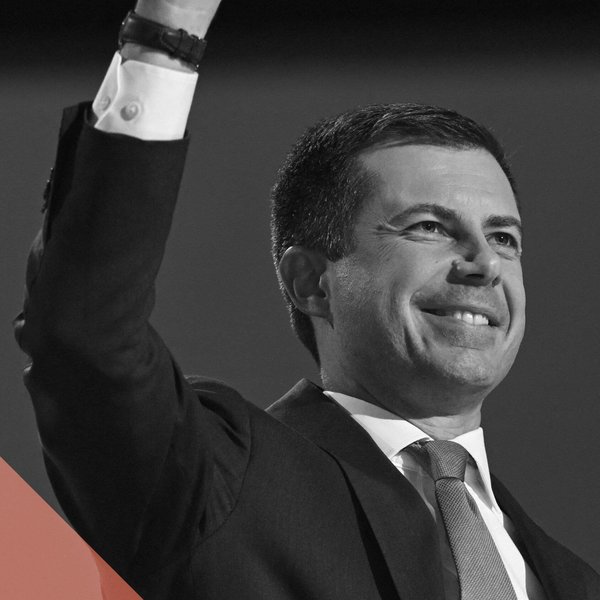
In 2020, Pete Buttigieg wrote a book on trust in politics. And he’s been persistent in making the case — in speeches, on TV — for what he calls “a better kind of politics.” So I wanted to talk to him about his theory of politics. Why does he think so many Americans have lost trust in the government? What responsibility does the Democratic Party have here? And how does he believe trust can be restored?
Note: I invited Buttigieg on the show in his personal capacity so we could discuss his thoughts on the election without violating the Hatch Act, which prohibits members of the government from campaigning in their official guise. This also means I wasn't able to ask Buttigieg many questions about his work as transportation secretary. But I think we still had a pretty fascinating conversation.