From this episode
Recommended books
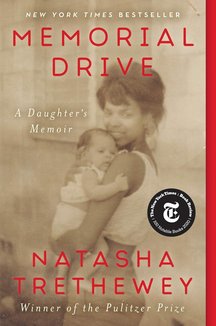
Memorial Drive: A Daughter's Memoir
Author:
Natasha Trethewey
An Instant New York Times Bestseller A New York Times Notable Book One of Barack Obama's Favorite Books of 2020 Named One of the Best Books of the Year by: The Washington Post, NPR, Shelf Awareness , Esquire , Electric Literature , Slate , The Los Angeles Times , USA Today , and InStyle A chillingly personal and exquisitely wrought memoir of a daughter reckoning with the brutal murder of her mother at the hands of her former stepfather, and the moving, intimate story of a poet coming into her own in the wake of a tragedy At age nineteen, Natasha Trethewey had her world turned upside down when her former stepfather shot and killed her mother. Grieving and still new to adulthood, she confronted the twin pulls of life and death in the aftermath of unimaginable trauma and now explores the way this experience lastingly shaped the artist she became.
An Instant New York Times Bestseller A New York Times Notable Book One of Barack Obama's Favorite Books of 2020 Named One of the Best Books of the Year by: The Washington Post, NPR, Shelf Awareness , Esquire , Electric Literature , Slate , The Los Angeles Times , USA Today , and InStyle A chillingly personal and exquisitely wrought memoir of a daughter reckoning with the brutal murder of her mother at the hands of her former stepfather, and the moving, intimate story of a poet coming into her own in the wake of a tragedy At age nineteen, Natasha Trethewey had her world turned upside down when her former stepfather shot and killed her mother. Grieving and still new to adulthood, she confronted the twin pulls of life and death in the aftermath of unimaginable trauma and now explores the way this experience lastingly shaped the artist she became. With penetrating insight and a searing voice that moves from the wrenching to the elegiac, Pulitzer Prize–winning poet Natasha Trethewey explores this profound experience of pain, loss, and grief as an entry point into understanding the tragic course of her mother’s life and the way her own life has been shaped by a legacy of fierce love and resilience. Moving through her mother’s history in the deeply segregated South and through her own girlhood as a “child of miscegenation” in Mississippi, Trethewey plumbs her sense of dislocation and displacement in the lead-up to the harrowing crime that took place on Memorial Drive in Atlanta in 1985. Memorial Drive is a compelling and searching look at a shared human experience of sudden loss and absence but also a piercing glimpse at the enduring ripple effects of white racism and domestic abuse. Animated by unforgettable prose and inflected by a poet’s attention to language, this is a luminous, urgent, and visceral memoir from one of our most important contemporary writers and thinkers.
Find this book on:


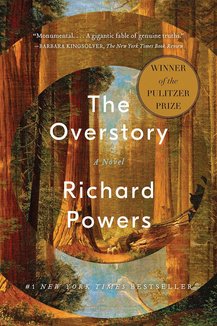
The Overstory: A Novel
Author:
Richard Powers
Winner of the Pulitzer Prize in Fiction Winner of the William Dean Howells Medal Shortlisted for the Booker Prize Over One Year on the New York Times Bestseller List Named One of the Best Books of the 21st Century by the New York Times Book Review A New York Times Notable Book and a Washington Post , Time , Oprah Magazine , Newsweek , Chicago Tribune , and Kirkus Reviews Best Book of the Year "The best novel ever written about trees, and really just one of the best novels, period." ―Ann Patchett The Overstory , winner of the 2019 Pulitzer Prize in Fiction, is a sweeping, impassioned work of activism and resistance that is also a stunning evocation of―and paean to―the natural world. From the roots to the crown and back to the seeds, Richard Powers’s twelfth novel unfolds in concentric rings of interlocking fables that range from antebellum New York to the late twentieth-century Timber Wars of the Pacific Northwest and beyond.
Winner of the Pulitzer Prize in Fiction Winner of the William Dean Howells Medal Shortlisted for the Booker Prize Over One Year on the New York Times Bestseller List Named One of the Best Books of the 21st Century by the New York Times Book Review A New York Times Notable Book and a Washington Post , Time , Oprah Magazine , Newsweek , Chicago Tribune , and Kirkus Reviews Best Book of the Year "The best novel ever written about trees, and really just one of the best novels, period." ―Ann Patchett The Overstory , winner of the 2019 Pulitzer Prize in Fiction, is a sweeping, impassioned work of activism and resistance that is also a stunning evocation of―and paean to―the natural world. From the roots to the crown and back to the seeds, Richard Powers’s twelfth novel unfolds in concentric rings of interlocking fables that range from antebellum New York to the late twentieth-century Timber Wars of the Pacific Northwest and beyond. There is a world alongside ours―vast, slow, interconnected, resourceful, magnificently inventive, and almost invisible to us. This is the story of a handful of people who learn how to see that world and who are drawn up into its unfolding catastrophe.
Find this book on:
Episode overview
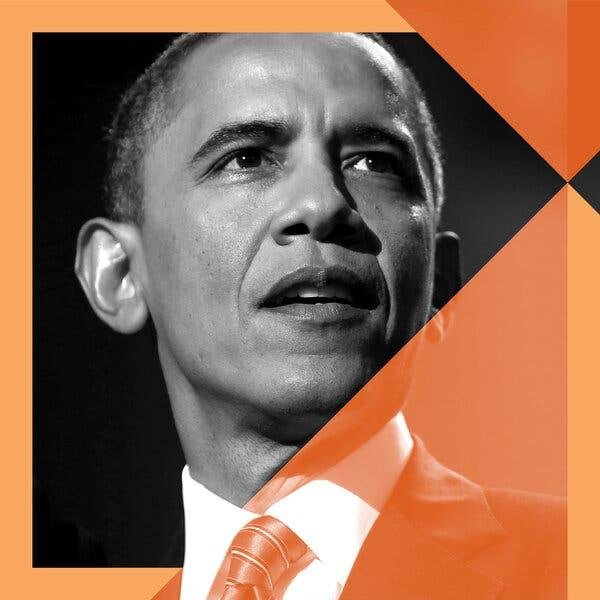
“My entire politics is premised on the fact that we are these tiny organisms on this little speck floating in the middle of space,” Barack Obama told me, sitting in his office in Washington, D.C.
To be fair, I was the one who had introduced the cosmic scale, asking how proof of alien life would change his politics. But Obama, in a philosophical mood, used the question to trace his view of humanity. “The differences we have on this planet are real,” he said. “They’re profound. And they cause enormous tragedy as well as joy. But we’re just a bunch of humans with doubts and confusion. We do the best we can. And the best thing we can do is treat each other better, because we’re all we got.”
Before our interview, I’d read “A Promised Land,” the first volume of Obama’s presidential memoirs. It had left me thinking about the central paradox of Obama’s political career. He accomplished one of the most remarkable acts of political persuasion in American history, convincing the country to vote, twice, for a liberal Black man named Barack Hussein Obama during the era of the war on terror. But he left behind a country that is less persuadable, more polarized, and more divided. The Republican Party, of course, became a vessel for the Tea Party, for Sarah Palin, for Donald Trump — a direct challenge to the pluralistic, democratic politics Obama practiced. But the left, too, has struggled with the limits of Obama’s presidency, coming to embrace a more confrontational and unsparing approach to politics.
So this is a conversation with Obama about both the successes and failures of his presidency. We talk about his unusual approach to persuasion, when it’s best to leave some truths unsaid, the media dynamics that helped fuel both his and Trump’s campaigns, how to reduce educational polarization, why he believes Americans have become less politically persuadable, the mistakes he believes were made in the design of the 2009 stimulus and the Affordable Care Act, the ways in which Biden is completing the policy changes begun in the Obama administration, what humans are doing now that we will be judged for most harshly in 100 years, and more.
Mentioned in this episode
“Why Obamacare enrollees voted for Trump” by Sarah Kliff, Vox
“By 2040, two-thirds of Americans will be represented by 30 percent of the Senate” by Philip Bump, The Washington Post
“Advantage, GOP” by Laura Bronner and Nathaniel Rakich, FiveThirtyEight