
From this episode
Recommended books
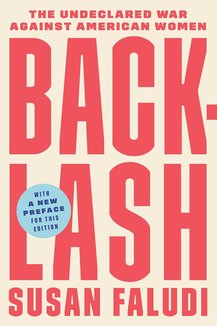
Backlash: The Undeclared War Against American Women
Author:
Susan Faludi
A new edition of the feminist classic, with an all-new introduction exploring the role of backlash in the 2016 election and laying out a path forward for 2020 and beyond Winner of the National Book Critics Circle Award • “Enraging, enlightening, and invigorating, Backlash is, most of all, true.”— Newsday First published in 1991, Backlash made headlines and became a bestselling classic for its thoroughgoing debunking of a decadelong antifeminist backlash against women’s advances. A Pulitzer Prize–winning journalist, Susan Faludi brilliantly deconstructed the reigning myths about the “costs” of women’s independence—from the supposed “man shortage” to the “infertility epidemic” to “career burnout” to “toxic day care”—and traced their circulation from Reagan-era politics through the echo chambers of mass media, advertising, and popular culture.
A new edition of the feminist classic, with an all-new introduction exploring the role of backlash in the 2016 election and laying out a path forward for 2020 and beyond Winner of the National Book Critics Circle Award • “Enraging, enlightening, and invigorating, Backlash is, most of all, true.”— Newsday First published in 1991, Backlash made headlines and became a bestselling classic for its thoroughgoing debunking of a decadelong antifeminist backlash against women’s advances. A Pulitzer Prize–winning journalist, Susan Faludi brilliantly deconstructed the reigning myths about the “costs” of women’s independence—from the supposed “man shortage” to the “infertility epidemic” to “career burnout” to “toxic day care”—and traced their circulation from Reagan-era politics through the echo chambers of mass media, advertising, and popular culture. As Faludi writes in a new preface for this edition, much has changed in the intervening years: The Internet has given voice to a new generation of feminists. Corporations list “gender equality” among their core values. In 2019, a record number of women entered Congress. Yet the glass ceiling is still unshattered, women are still punished for wanting to succeed, and reproductive rights are hanging by a thread. This startling and essential book helps explain why women’s freedoms are still so demonized and threatened—and urges us to choose a different future.
Find this book on:


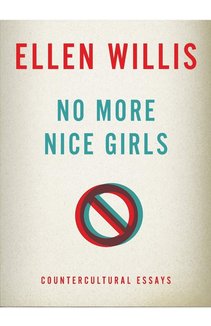
No More Nice Girls: Countercultural Essays
Author:
Ellen Willis
With characteristic intelligence, wit, and feminist insight, Ellen Willis addresses democracy as she sees it: “a commitment to individual freedom and egalitarian self-government in every area of social, economic, and cultural life.” Moving between scholarly and down-to-earth activist writing styles, Willis confronts the conservative backlash that has slowly eroded democratic ideals and advances of the 1960s as well as the internal debates that have frequently splintered the left.
With characteristic intelligence, wit, and feminist insight, Ellen Willis addresses democracy as she sees it: “a commitment to individual freedom and egalitarian self-government in every area of social, economic, and cultural life.” Moving between scholarly and down-to-earth activist writing styles, Willis confronts the conservative backlash that has slowly eroded democratic ideals and advances of the 1960s as well as the internal debates that have frequently splintered the left.
Find this book on:
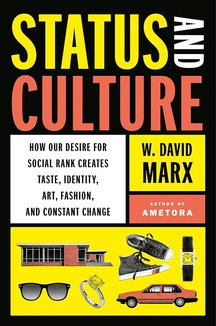
"Subtly altered how I see the world." —Michelle Goldberg, New York Times “[ Status and Culture ] consistently posits theories I'd never previously considered that instantly feel obvious.” —Chuck Klosterman, author of The Nineties “Why are you the way that you are? Status and Culture explains nearly everything about the things you choose to be—and how the society we live in takes shape in the process.” —B.J.
"Subtly altered how I see the world." —Michelle Goldberg, New York Times “[ Status and Culture ] consistently posits theories I'd never previously considered that instantly feel obvious.” —Chuck Klosterman, author of The Nineties “Why are you the way that you are? Status and Culture explains nearly everything about the things you choose to be—and how the society we live in takes shape in the process.” —B.J. Novak, writer and actor Solving the long-standing mysteries of culture—from the origin of our tastes and identities, to the perpetual cycles of fashions and fads—through a careful exploration of the fundamental human desire for status All humans share a need to secure their social standing, and this universal motivation structures our behavior, forms our tastes, determines how we live, and ultimately shapes who we are. We can use status, then, to explain why some things become “cool,” how stylistic innovations arise, and why there are constant changes in clothing, music, food, sports, slang, travel, hairstyles, and even dog breeds. In Status and Culture , W. David Marx weaves together the wisdom from history, psychology, sociology, anthropology, economics, philosophy, linguistics, semiotics, cultural theory, literary theory, art history, media studies, and neuroscience to demonstrate exactly how individual status seeking creates our cultural ecosystem. Marx examines three fundamental questions: Why do individuals cluster around arbitrary behaviors and take deep meaning from them? How do distinct styles, conventions, and sensibilities emerge? Why do we change behaviors over time and why do some behaviors stick around? The answers then provide new perspectives for understanding the seeming “weightlessness” of internet culture. Status and Culture is a book that will appeal to business people, students, creators, and anyone who has ever wondered why things become popular, why their own preferences change over time, and how identity plays out in contemporary society. Readers of this book will walk away with deep and lasting knowledge of the often secret rules of how culture really works.
Find this book on:
Episode overview
“It’s true: We’re in trouble,” writes Michelle Goldberg of the modern feminist movement. “One thing backlashes do is transform a culture’s common sense and horizons of possibility. A backlash isn’t just a political formation. It’s also a new structure of feeling that makes utopian social projects seem ridiculous.”
It wouldn’t be fair to blame the Supreme Court decision in Dobbs v. Jackson Women’s Health Organization and the ensuing wave of draconian abortion laws sweeping the nation on a failure of persuasion, or on a failure of the women’s movement. But signs of anti-feminist backlash are permeating American culture: Girlbosses have become figures of ridicule, Amber Heard’s testimony drew a fire hose of misogyny, and recent polling finds that younger generations — both men and women — are feeling ambivalent about whether feminism has helped or hurt women. A movement that has won so many victories in law, politics and public opinion is now defending its very existence.
Goldberg is a columnist for Times Opinion who focuses on gender and politics. In recent weeks, she has written a series of columns grappling with the overturning of Roe v. Wade, but also considering the broader atmosphere that created so much despair on the left. What can feminists — and Democrats more broadly — learn from anti-abortion organizers? How has the women’s movement changed in the half-century since Roe, and where can the movement go after this loss? Has feminism moved too far away from its early focus on organizing and into the turbulent waters of online discourse? Has it become a victim of its own success?
We discuss a “flabbergasting” poll about the way young people — both men and women — feel about feminism, why so many young people have become pessimistic about heterosexual relationships, how the widespread embrace of feminism defanged its politics, why the anti-abortion movement is so good at recruiting and retaining activists — and what the left can learn from them, how today’s backlash against women compares to that of the Reagan years, why nonprofits on the left are in such extreme turmoil, why a social movement’s obsession with “cringe” can be its downfall, how “safe spaces” on the left started to feel unsafe, why feminism doesn’t always serve poor women, whether the #MeToo movement was overly dismissive of “due process” and how progressives could improve the way they talk about the family and more.