From this episode
Recommended books
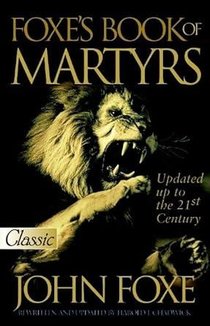
Foxe's Book of Martyrs (Pure Gold Classics)
Authors:
John Foxe,
Harold J. Chadwick
Would you suffer and die for Christ? "When the Church does not feel pain with those that are part of them, the Church's nerves ...
Would you suffer and die for Christ? "When the Church does not feel pain with those that are part of them, the Church's nerves ... become dead." Sabrina Wurmbrand, Co-founder of The Voice of the Martyrs In 1563, John Foxe began writing a book in tribute to Christian martyrs, beginning with Stephen, the first believer who died for the cause of Christ. Foxe's original work ended with the martyrs of his own day — those who were killed during the reign of "Bloody Mary." He wanted the Church to remember the martyrs, for he knew that the blood of the martyrs truly is the seed of the Church. Martyrdom is not a thing of the past. The Christian Church continues to endure great persecution in many places around the world. In fact, more Christians were affected by persecution, including martyrdom, during the twentieth century than in all previous centuries combined. Listen to the cries of the martyrs, and let their faith, courage, and love touch your life. This classic work will stir you, challenge you, and inspire you to surrender everything to Christ. It will greatly build your faith.
Find this book on:


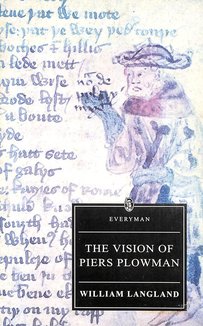
Vision of Piers Plowman (Everyman's Library) (English and Middle English Edition)
Authors:
William Langland,
Elizabeth Robertson,
Stephen H. A. Shepherd
Piers Plowman is the greatest poem of the Middle English Alliterative Revival. Langland (perhaps c.
Piers Plowman is the greatest poem of the Middle English Alliterative Revival. Langland (perhaps c. 1330-c. 1386) writes passionately about social justice and religious integrity, weaving into the dream of a weary wanderer the whole of humanity's struggle against sin. This edition of the B-Text has been described as "a landmark in Langland studies."
Find this book on:
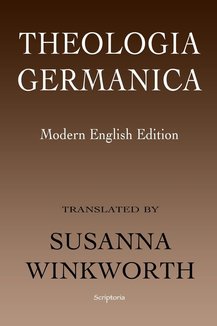
Theologia Germanica: Modern English Edition
Author:
Susanna Winkworth
The Theologia Germanica is believed to have been written around 1350, by a priest in the house of the Teutonic order in Frankfort, Germany. The author may have been associated with the "Friends of God," led by Dominicans, John Tauler and Blessed Henry Suso.
The Theologia Germanica is believed to have been written around 1350, by a priest in the house of the Teutonic order in Frankfort, Germany. The author may have been associated with the "Friends of God," led by Dominicans, John Tauler and Blessed Henry Suso. This book came to the attention of Martin Luther, and he is credited with giving the treatise its modern name. Written over a century before Luther's time, its theology draws upon the Latin Christianity of the Rhineland. The Theologia Germanica has appeared in many editions and languages over its 600-year history, and has taken its place beside the Imitation of Christ , in literature of devotion. Susanna Winkworth (1820-1884), translated the most complete version of the Theologia Germanica known, based on the Wurtzburg Manuscript, discovered in the 19th century. Her translation, first published in 1854, includes additional passages not found in the editions made popular by Martin Luther. In this Modern English Edition of the Theologia Germanica from Scriptoria Books, only obsolete, archaic, and poetic words have been edited. The grammar and syntax of Susanna Winkworth's original translation from the German manuscript, have been preserved. This creates an edition that is true to the composition of the original translation, while providing a more-modern easier-reading text.
Find this book on:
Episode overview
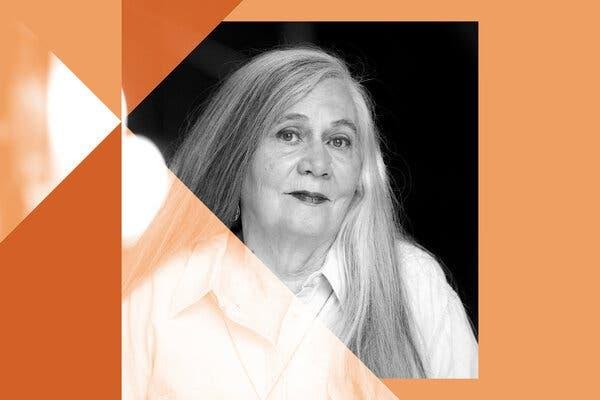
Marilynne Robinson is one of the great living novelists. She has won a Pulitzer Prize and a National Humanities Medal, and Barack Obama took time out of his presidency to interview her at length. Her fiction is suffused with a sense of holiness: Mundane images like laundry drying on a line seem to be illuminated by a divine force. Whether she’s telling the story of a pastor confronting his mortality in “Gilead” or two sisters coming of age in small-town Idaho in “Housekeeping,” her novels wrestle with theological questions of what it means to be human, to see the world more deeply, to seek meaning in life.
In recent years, Robinson has tightened the links between her literary pursuits and her Christianity, writing essays about Calvinism and other theological traditions. Her forthcoming work of nonfiction is “Reading Genesis,” a close reading of the first book of the Old Testament (or the Torah, as I grew up knowing it). It’s a countercultural reading in many respects — one that understands the God in Genesis as merciful rather than vengeful and humans as flawed but capable of astounding acts of grace. No matter one’s faith, Robinson unearths wisdom in this core text that applies to many questions we wrestle with today.
We discuss the virtues evoked in Genesis — beauty, forgiveness and hospitality — and how to cultivate what Robinson calls “a mind that’s schooled toward good attention.” And we end on her reading of the story of Israel, which I found to be challenging, moving and evocative at a time when that nation has been front and center in the news.