
From this episode
Recommended books
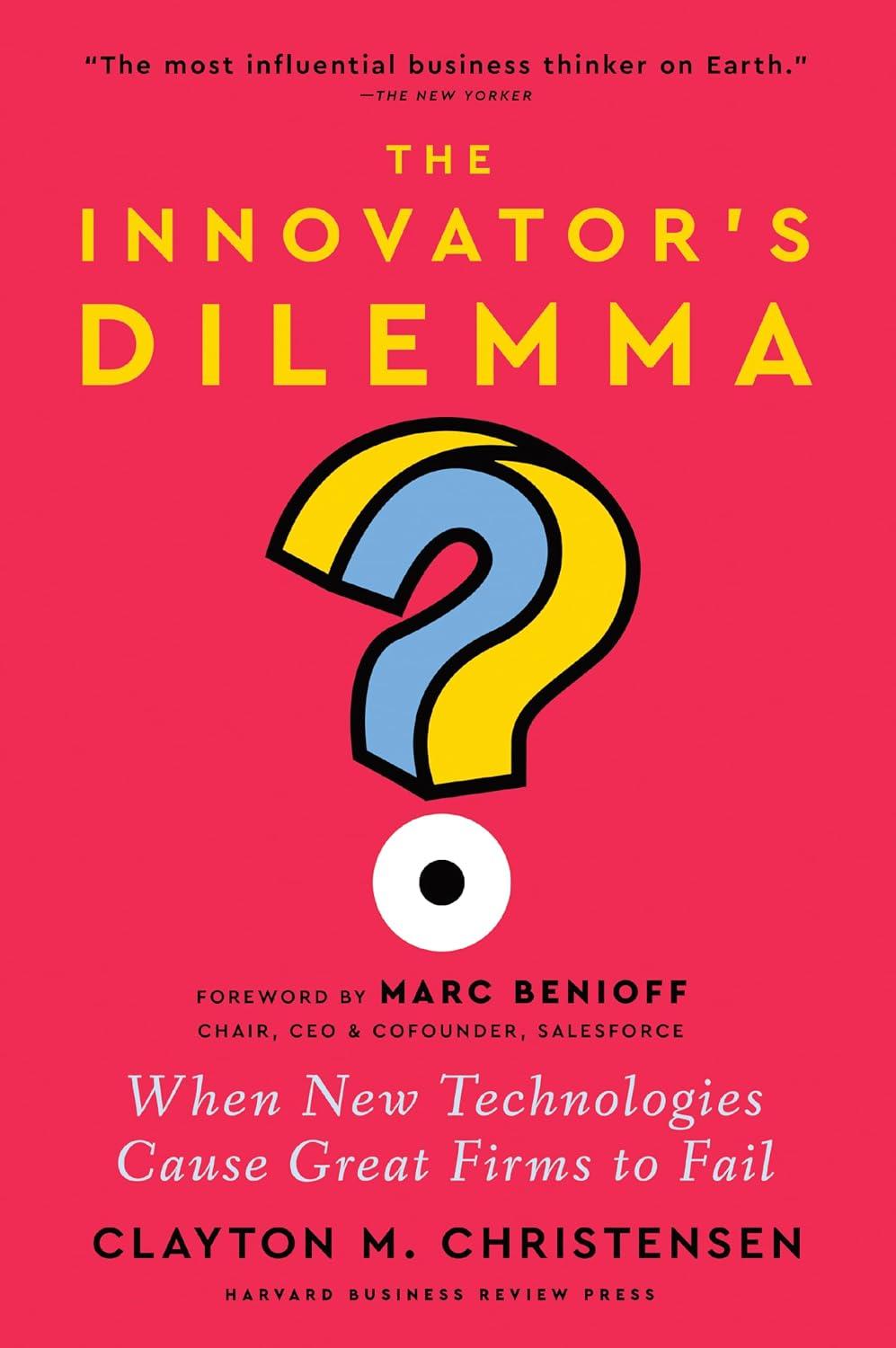
The Innovator's Dilemma, with a New Foreword: When New Technologies Cause Great Firms to Fail
Authors:
Clayton M. Christensen,
Marc Benioff
The bestselling classic on disruptive innovation by renowned author Clayton M. Christensen.
The bestselling classic on disruptive innovation by renowned author Clayton M. Christensen. A Wall Street Journal and Businessweek Bestseller. Named by the Economist as one of the six most important books about business ever written. Named by Fast Company as one of the most influential leadership books in its Leadership Hall of Fame. His work is cited by the world's best-known thought leaders, from Steve Jobs to Malcolm Gladwell. In this classic bestseller—one of the most influential business books of all time—innovation expert Clayton Christensen shows how even the most outstanding companies can do everything right yet still lose market leadership. Now with a foreword by Marc Benioff, the cofounder and CEO of Salesforce, Christensen explains why most companies miss out on new waves of innovation. No matter the industry, he says, a successful company with established products will get pushed aside unless managers know how and when to abandon traditional business practices. Offering both successes and failures from leading companies as a guide, The Innovator’s Dilemma gives you a set of rules for capitalizing on the phenomenon of disruptive innovation. Sharp, cogent, and provocative—and consistently noted as one of the most valuable business ideas of all time— The Innovator’s Dilemma is the book no manager, leader, or entrepreneur should be without.
Find this book on:

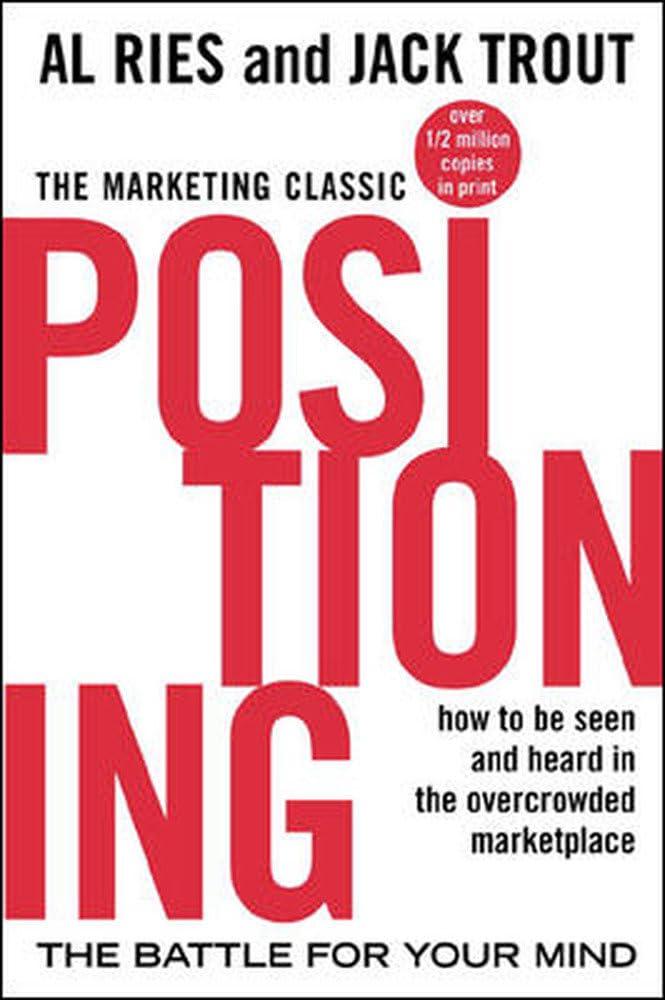
Positioning: The Battle for Your Mind
Authors:
Al Ries,
Jack Trout,
Philip Kotler
The first book to deal with the problems of communicating to a skeptical, media-blitzed public, Positioning describes a revolutionary approach to creating a "position" in a prospective customer's mind-one that reflects a company's own strengths and weaknesses as well as those of its competitors. Writing in their trademark witty, fast-paced style, advertising gurus Ries and Trout explain how to: Make and position an industry leader so that its name and message wheedles its way into the collective subconscious of your market-and stays there Position a follower so that it can occupy a niche not claimed by the leader Avoid letting a second product ride on the coattails of an established one.
The first book to deal with the problems of communicating to a skeptical, media-blitzed public, Positioning describes a revolutionary approach to creating a "position" in a prospective customer's mind-one that reflects a company's own strengths and weaknesses as well as those of its competitors. Writing in their trademark witty, fast-paced style, advertising gurus Ries and Trout explain how to: Make and position an industry leader so that its name and message wheedles its way into the collective subconscious of your market-and stays there Position a follower so that it can occupy a niche not claimed by the leader Avoid letting a second product ride on the coattails of an established one. Positioning also shows you how to: Use leading ad agency techniques to capture the biggest market share and become a household name Build your strategy around your competition's weaknesses Reposition a strong competitor and create a weak spot Use your present position to its best advantage Choose the best name for your product Determine when-and why-less is more Analyze recent trends that affect your positioning. Ries and Trout provide many valuable case histories and penetrating analyses of some of the most phenomenal successes and failures in advertising history. Revised to reflect significant developments in the five years since its original publication, Positioning is required reading for anyone in business today.
Find this book on:
Episode overview
Jensen Huang might just be the single most influential person in artificial intelligence today.
Huang is the chief executive of Nvidia, the company that designs nearly all the chips and infrastructure that the rest of the industry relies on. This has made Nvidia the most valuable company in the world and has made Huang incredibly influential in the Trump administration.
And unlike many of the leaders of the frontier labs, Huang doesn’t think A.I. could wipe out humanity. He thinks that the doomers are just scaring people, and that the industry doesn’t need new regulation at all. I wanted to hear how he saw it, so I flew out to Nvidia’s headquarters in Santa Clara, Calif., to talk to him.