
From this episode
Recommended books
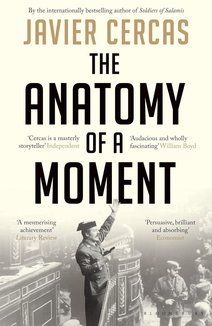
The Anatomy of a Moment
Authors:
Javier Cercas,
Anne McLean
In February 1981, just as Spain was set to leave Franco's dictatorship and embark upon a new era of democracy, Lieutenant Colonel Tejero and his band of civil guards stormed the parliament and opened fire. Only three members of Congress did not dive for cover: Adolfo Suarez, the outgoing prime minister, General Gutierrez Mellado and Santiago Carrillo, head of the newly legalised Communist party.
In February 1981, just as Spain was set to leave Franco's dictatorship and embark upon a new era of democracy, Lieutenant Colonel Tejero and his band of civil guards stormed the parliament and opened fire. Only three members of Congress did not dive for cover: Adolfo Suarez, the outgoing prime minister, General Gutierrez Mellado and Santiago Carrillo, head of the newly legalised Communist party. In the Anatomy of a Moment, Javier Cercas, one of Spain's most important writers, combines the facts of history with the novelist's flair to capture the coup which symbolised Spain's final struggle to end its brutal civil war, employing insight, intricacy and incisive judgement to recreate the tension felt by a country whose future hung uncertainly in the balance.
Find this book on:


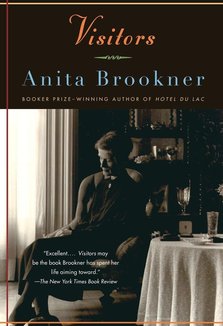
Visitors: A Novel
Author:
Anita Brookner
The extraordinary Anita Brookner, praised by The New York Times as "one of the finest novelists of her generation," gives us a brilliant novel about age and awakening. In Visitors, Brookner explores what happens when a woman's quiet resignation to fate is challenged by the arrogance of youth.
The extraordinary Anita Brookner, praised by The New York Times as "one of the finest novelists of her generation," gives us a brilliant novel about age and awakening. In Visitors, Brookner explores what happens when a woman's quiet resignation to fate is challenged by the arrogance of youth. Dorothea May is most at ease in the company of strangers. When her late husband's relatives prevail on her to take in a young man for the week before an unexpected family wedding, Thea's carefully constructed, solitary world is thrown into disarray. As the wedding approaches, old family secrets surface and conflicts erupt between the generations, trapping an unwilling Thea in the middle. Confronted by the company of Steve Best, a carefree young wanderer, Thea's fragile facade of peaceful acceptance is pierced, forcing her to face in a new way both her past and her future. Exquisite writing, richly drawn characters, and penetrating prceptions about people are here combined into another superb novel by the writer about whom The New York Times Book Review has said, "If Henry James were around, the only writer he'd be reading with complete approval would be Anita Brookner."
Find this book on:
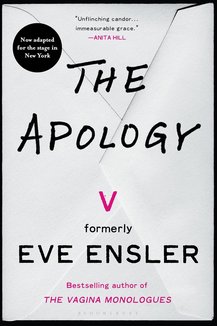
Apology
Author:
V formerly Eve Ensler
From the bestselling author of The Vagina Monologues - a powerful, life-changing examination of abuse and atonement - now in paperback. “A triumph of artistry and empathy.” - Naomi Klein “A crucial step forward .
From the bestselling author of The Vagina Monologues - a powerful, life-changing examination of abuse and atonement - now in paperback. “A triumph of artistry and empathy.” - Naomi Klein “A crucial step forward . . . This is an urgently needed book right now.” - Jane Fonda “Courageous, transformative, and yes - healing.” - Anne Lamott Like millions of women, Eve Ensler has been waiting much of her lifetime for an apology. Sexually and physically abused by her father, Eve has struggled her whole life from this betrayal, longing for an honest reckoning from a man who is long dead. After years of work as an anti-violence activist, she decided she would wait no longer; an apology could be imagined, by her, for her, to her. The Apology , written by Eve from her father's point of view in the words she longed to hear, attempts to transform the abuse she suffered with unflinching truthfulness, compassion, and an expansive vision for the future. Through The Apology Eve has set out to provide a new way for herself and a possible road for others, so that survivors of abuse may finally envision how to be free. She grapples with questions she has sought answers to since she first realized the impact of her father's abuse on her life: How do we offer a doorway rather than a locked cell? How do we move from humiliation to revelation, from curtailing behavior to changing it, from condemning perpetrators to calling them to reckoning? What will it take for abusers to genuinely apologize? Remarkable and original, The Apology is an acutely transformational look at how, from the wounds of sexual abuse, we can begin to re-emerge and heal. It is revolutionary, asking everything of each of us: courage, honesty, and forgiveness.
Find this book on:
Episode overview
“The sensation of being alive in the early 21st century consisted of the sense that our ability to pay attention — to focus — was cracking and breaking,” writes Johann Hari in his new book, “Stolen Focus.” Later he says, “It felt like our civilization had been covered with itching powder and we spent our time twitching and twerking our minds, unable to simply give attention to things that matter.”
Same.
Attention is the most precious resource we have — it’s the window through which we experience our lives. And for many of us, that window is fogging.
The knee-jerk response is to blame ourselves. If our attention is waning, it’s because we’re too distractible. But if there’s a single thesis of “Stolen Focus,” it’s that we have a lot less control over our attention than we like to believe — and not just because the apps on our smartphones are cunningly designed.
The book explores 12 factors that Hari believes are harming our ability to pay attention. And in it, there’s a clear distinction between what I’ve come to think of as the “demand side” and the “supply side” of attention. The demand side is the story we’re more familiar with: Entire economies and technologies are built around capturing, manipulating and directing our attention. But the supply side is just as important: A whole host of social conditions, from the food we eat to the amount we sleep to the chemicals in our air and the money in our bank accounts, determine the reservoirs of attention we have to draw on in the first place.
For Hari, that means that the state of our attention isn’t merely the product of individual failing or corporate manipulation — it’s an outgrowth of some of the most fundamental aspects of our society, our culture and our economy. And as a result it can’t be fixed by a few tweaks at the margins. To do that requires a sustained, rather radical, political project.
As you’ll hear in the conversation, I don’t agree wholly with Hari’s argument. But I think it’s a much needed push to look at the most fundamental of human facilities through a new lens. Life is the sum total of what we pay attention to. What forces are in control of our attention — and how we get it back — is a defining question of our age.