From this episode
Recommended books
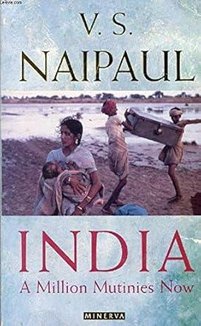
India Cook Prom
Author:
V.S. Naipaul
Prompted by the Emergency of 1975, Naipaul re-visited India, casting a more analytical eye over Indian attitudes. In this work, he reinforces his conviction that India, wounded by a thousand years of foreign rule, has not yet found an ideology of regeneration."
Prompted by the Emergency of 1975, Naipaul re-visited India, casting a more analytical eye over Indian attitudes. In this work, he reinforces his conviction that India, wounded by a thousand years of foreign rule, has not yet found an ideology of regeneration."
Find this book on:


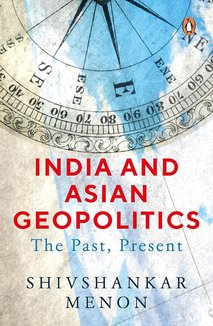
Documenting the changes in India's foreign policy: from Independence to the Modi era, Shivshankar Menon addresses the many questions, which perplex India as the nation seeks to find its way in the increasingly complex world of Asian geopolitics. From its leading role in the 'nonaligned' movement during the Cold War to its current status as a perceived counterweight to China, India often has been an after-thought for global leaders-until they realize how much they needed it.
Documenting the changes in India's foreign policy: from Independence to the Modi era, Shivshankar Menon addresses the many questions, which perplex India as the nation seeks to find its way in the increasingly complex world of Asian geopolitics. From its leading role in the 'nonaligned' movement during the Cold War to its current status as a perceived counterweight to China, India often has been an after-thought for global leaders-until they realize how much they needed it. Examining India's own policy choices throughout its history, Menon focuses in particular on its responses to the rise of China, as well as other regional powers. He also looks to the future and analyses how India's policies are likely to evolve in response to current and new challenges. As India gains new stature across the globe, both its domestic preoccupations and international choices become more significant. Authoritative, comprehensive and deeply engaging, in India and Asian Geopolitics Menon makes a powerful geopolitical case for an India increasingly and positively engaged in Asia and the broader world in pursuit of a pluralistic, open, and inclusive world order.
Find this book on:
![Dreamers: How Young Indians Are Changing Their World' [Hardcover] [Jan 01, 2018] SNIGDHA POONAM](https://sfo3.digitaloceanspaces.com/ezrakleinbooks/thumbnails/book/dreamers-how-young-indians-are-changing-the-world_dZhypVA.jpg.242x326_q85.jpg)
BRAND NEW, Exactly same ISBN as listed, Please double check ISBN carefully before ordering.
BRAND NEW, Exactly same ISBN as listed, Please double check ISBN carefully before ordering.
Find this book on:
Episode overview
India is known as a country of paradoxes, and a new one has recently emerged. At the same time that the country is poised to become a major global player — with a booming economy and a population that recently surpassed China’s — its democracy is showing signs of decay.
Prime Minister Narendra Modi and his administration have silenced critics and independent institutions. India’s social media discourse has turned increasingly right wing and hostile to Muslims. And Canada and the United States have accused Indian government officials of involvement in assassination plots against Sikh activists.
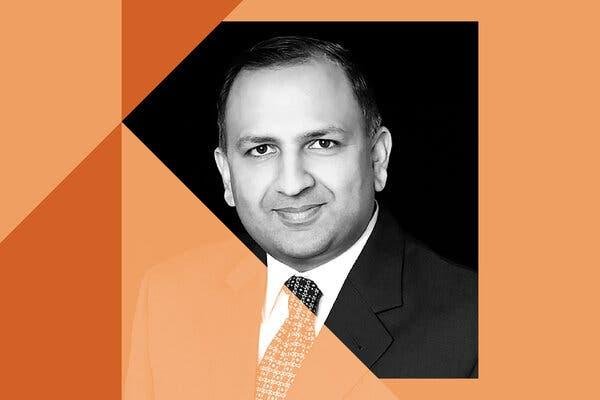
Pratap Bhanu Mehta is an honorary senior fellow at the Center for Policy Research, New Delhi; a professor at Princeton University; and an editor of “The Oxford Handbook to the Indian Constitution.” In this conversation, he walks our guest host Lydia Polgreen through India’s rising illiberalism. “The signs for Indian democracy are looking very ominous,” he says.
They discuss the paradox between India’s flourishing economy and culture and signs of weakening democracy, especially at a moment when many Western countries are cheering a rising India as a democratic counterweight to China. They also talk about what makes Modi such a remarkable and effective political leader and what the United States and other countries could or should do in response to a more assertive India that is shattering norms at home.