From this episode
Recommended books
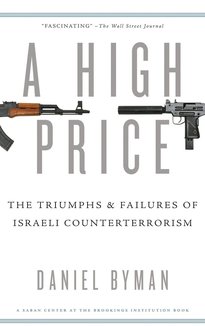
A High Price: The Triumphs and Failures of Israeli Counterterrorism
Author:
Daniel Byman
The product of painstaking research and countless interviews, A High Price offers a nuanced, definitive historical account of Israel's bold but often failed efforts to fight terrorist groups. Beginning with the violent border disputes that emerged after Israel's founding in 1948, Daniel Byman charts the rise of Yasir Arafat's Fatah and leftist groups such as the Popular Front for the Liberation of Palestine--organizations that ushered in the era of international terrorism epitomized by the 1972 hostage-taking at the Munich Olympics.
The product of painstaking research and countless interviews, A High Price offers a nuanced, definitive historical account of Israel's bold but often failed efforts to fight terrorist groups. Beginning with the violent border disputes that emerged after Israel's founding in 1948, Daniel Byman charts the rise of Yasir Arafat's Fatah and leftist groups such as the Popular Front for the Liberation of Palestine--organizations that ushered in the era of international terrorism epitomized by the 1972 hostage-taking at the Munich Olympics. Byman reveals how Israel fought these groups and others, such as Hamas, in the decades that follow, with particular attention to the grinding and painful struggle during the second intifada. Israel's debacles in Lebanon against groups like the Lebanese Hizballah are examined in-depth, as is the country's problematic response to Jewish terrorist groups that have struck at Arabs and Israelis seeking peace. In surveying Israel's response to terror, the author points to the coups of shadowy Israeli intelligence services, the much-emulated use of defensive measures such as sky marshals on airplanes, and the role of controversial techniques such as targeted killings and the security barrier that separates Israel from Palestinian areas. Equally instructive are the shortcomings that have undermined Israel's counterterrorism goals, including a disregard for long-term planning and a failure to recognize the long-term political repercussions of counterterrorism tactics.
Find this book on:



The Selected Works of Edward Said, 1966 - 2006
Authors:
Edward W. Said,
Moustafa Bayoumi,
Andrew Rubin
The renowned literary and cultural critic Edward Said was one of our era’s most provocative and important thinkers. This comprehensive collection of his work draws from across his entire four-decade career, including his posthumously published books, making it a definitive one-volume source.
The renowned literary and cultural critic Edward Said was one of our era’s most provocative and important thinkers. This comprehensive collection of his work draws from across his entire four-decade career, including his posthumously published books, making it a definitive one-volume source. "Said is a brilliant and unique amalgam of scholar, aesthete, and political activist...[He] challenges and stimulates our thinking in every area." -- Washington Post Book World The Selected Works includes key sections from all of Said’s books, including his groundbreaking Orientalism; his memoir, Out of Place ; and his last book, On Late Style . Whether writing of Zionism or Palestinian self-determination, Jane Austen or Yeats, or of music or the media, Said’s uncompromising intelligence casts urgent light on every subject he undertakes. The Selected Works is a joy for the general reader and an indispensable resource for scholars in the many fields that his work has influenced and transformed.
Find this book on:
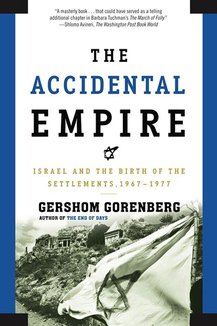
The Accidental Empire: Israel and the Birth of the Settlements, 1967-1977
Author:
Gershom Gorenberg
"Remarkably insightful . .
"Remarkably insightful . . . A groundbreaking revision that deserves to reframe the entire debate . . . It soars."―The New York Times Book Review In The Accidental Empire , Gershom Gorenberg examines the strange birth of the settler movement in the ten years following the Six-Day War and finds that it was as much the child of Labor Party socialism as of religious extremism. The giants of Israeli history―Dayan, Meir, Eshkol, Allon―all played major roles in this drama, as did more contemporary figures like Sharon, Rabin, and Peres. Gorenberg also shows how three American presidents turned a blind eye to what was happening in the territories, and reveals their strategic reasons for doing so. Drawing on newly opened archives and extensive interviews, Gorenberg calls into question much of what we think we know about this issue that continues to haunt the Middle East.
Find this book on:
Episode overview
“Two things are true: Israel must do something, and what it’s doing now is indefensible.” So writes Zack Beauchamp, a senior correspondent at Vox.
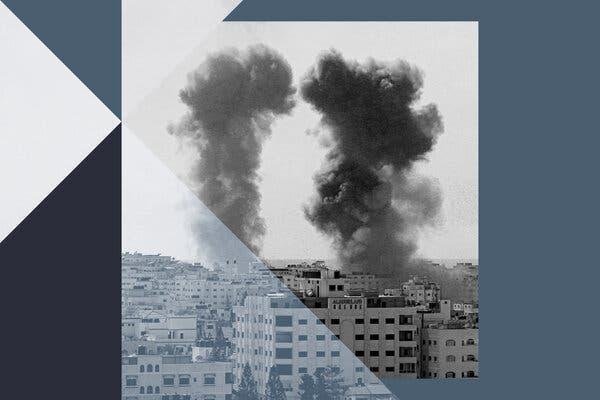
Almost a month has passed since Hamas fighters slaughtered over 1,400 people in Israel and the state mounted its furious response. For weeks, Israel has laid siege to Gaza, cutting off water and electricity to the tiny strip of land and carrying out airstrikes that have reportedly killed over 8,000 Palestinians. On Friday a ground invasion began, and the response across much of the globe has been horror. If Israel continues down this road, the cost in Palestinian lives, and in support for Israel, will be immense.
The question that hangs over the criticism is this: What, then, should Israel do? What would be a moral response to Hamas’s savagery and to the very real need Israelis have for security?
Beauchamp, who has covered Israel extensively in recent years, set out to answer that question. He spoke with counterterrorism experts, military historians, experts on Hamas, ethicists and more. I found his piece “What Israel Should Do Now” one of the best I’ve read since Oct. 7. So I asked him to join me on the show.