
From this episode
Recommended books
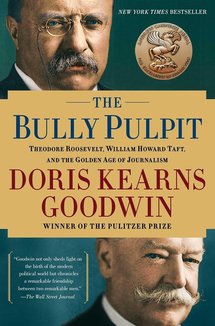
The Bully Pulpit: Theodore Roosevelt and the Golden Age of Journalism
Author:
Doris Kearns Goodwin
Pulitzer Prize–winning author and presidential historian Doris Kearns Goodwin’s dynamic history of Theodore Roosevelt, William H. Taft and the first decade of the Progressive era, that tumultuous time when the nation was coming unseamed and reform was in the air.
Pulitzer Prize–winning author and presidential historian Doris Kearns Goodwin’s dynamic history of Theodore Roosevelt, William H. Taft and the first decade of the Progressive era, that tumultuous time when the nation was coming unseamed and reform was in the air. Winner of the Carnegie Medal. Doris Kearns Goodwin’s The Bully Pulpit is a dynamic history of the first decade of the Progressive era, that tumultuous time when the nation was coming unseamed and reform was in the air. The story is told through the intense friendship of Theodore Roosevelt and William Howard Taft—a close relationship that strengthens both men before it ruptures in 1912, when they engage in a brutal fight for the presidential nomination that divides their wives, their children, and their closest friends, while crippling the progressive wing of the Republican Party, causing Democrat Woodrow Wilson to be elected, and changing the country’s history. The Bully Pulpit is also the story of the muckraking press, which arouses the spirit of reform that helps Roosevelt push the government to shed its laissez-faire attitude toward robber barons, corrupt politicians, and corporate exploiters of our natural resources. The muckrakers are portrayed through the greatest group of journalists ever assembled at one magazine—Ida Tarbell, Ray Stannard Baker, Lincoln Steffens, and William Allen White—teamed under the mercurial genius of publisher S.S. McClure. Goodwin’s narrative is founded upon a wealth of primary materials. The correspondence of more than four hundred letters between Roosevelt and Taft begins in their early thirties and ends only months before Roosevelt’s death. Edith Roosevelt and Nellie Taft kept diaries. The muckrakers wrote hundreds of letters to one another, kept journals, and wrote their memoirs. The letters of Captain Archie Butt, who served as a personal aide to both Roosevelt and Taft, provide an intimate view of both men. The Bully Pulpit , like Goodwin’s brilliant chronicles of the Civil War and World War II, exquisitely demonstrates her distinctive ability to combine scholarly rigor with accessibility. It is a major work of history—an examination of leadership in a rare moment of activism and reform that brought the country closer to its founding ideals.
Find this book on:


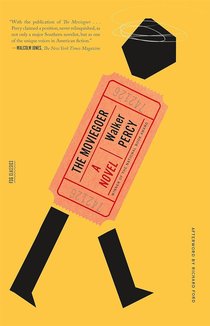
The Moviegoer: A Novel (FSG Classics)
Authors:
Walker Percy,
Paul Elie
Winner of the 1962 National Book Award and one of Time magazine’s 100 Best English-Language Novels, Walker Percy’s debut The Moviegoer is an American masterpiece and a classic of Southern literature. Insightful, romantic, and humorous, it is the story of a young man’s search for meaning amid a shallow consumerist landscape.
Winner of the 1962 National Book Award and one of Time magazine’s 100 Best English-Language Novels, Walker Percy’s debut The Moviegoer is an American masterpiece and a classic of Southern literature. Insightful, romantic, and humorous, it is the story of a young man’s search for meaning amid a shallow consumerist landscape. Binx Bolling, a young New Orleans stockbroker, fills his days with movies and casual sex. His life offers him nothing worth retaining; what he treasures are scenes from The Third Man or Stagecoach , not the personal experiences he knows other people hold dear. On the cusp of turning thirty, however, something changes: At Mardi Gras, he embarks on a quest for some form of authentic experience. The consequences of Binx’s quest, on both himself and his unstable cousin Kate, prove outrageous, absurd, moving, and indelible. Featuring an afterword by Paul Elie, this new edition of The Moviegoer cements Walker Percy’s place as a giant of American literature.
Find this book on:
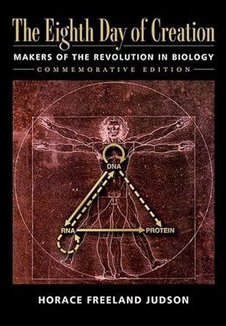
The Eighth Day of Creation: Makers of the Revolution in Biology, Commemorative Edition
Author:
Horace Freeland Judson
In this classic book, the distinguished science writer Horace Freeland Judson tells the story of the birth and early development of molecular biology in the US, the UK, and France. The fascinating story of the golden period from the revelation of the double helix of DNA to the cracking of the genetic code and first glimpses of gene regulation is told largely in the words of the main players, all of whom Judson interviewed extensively.
In this classic book, the distinguished science writer Horace Freeland Judson tells the story of the birth and early development of molecular biology in the US, the UK, and France. The fascinating story of the golden period from the revelation of the double helix of DNA to the cracking of the genetic code and first glimpses of gene regulation is told largely in the words of the main players, all of whom Judson interviewed extensively. The result is a book widely regarded as the best history of recent biological science yet published. This commemorative edition, honoring the memory of the author who died in 2011, contains essays by his daughter Olivia Judson, Matthew Meselson, and Mark Ptashne and an obituary by Jason Pontin. It contains all the content added to previous editions, including essays on some of the principal historical figures involved, such as Rosalind Franklin, and a sketch of the further development of molecular biology in the era of recombinant DNA.
Find this book on:
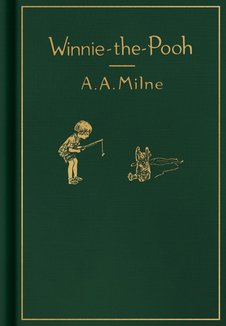
Winnie-the-Pooh: Classic Gift Edition
Authors:
A. A. Milne,
Ernest H. Shepard
The perfect gift for both new readers and passionate collectors! A gorgeous new collectible edition of the beloved classic, Winnie-the-Pooh , crafted as a replica of the first American edition from 1926.
The perfect gift for both new readers and passionate collectors! A gorgeous new collectible edition of the beloved classic, Winnie-the-Pooh , crafted as a replica of the first American edition from 1926. This elegant book features a textured case, gold foil stamping, and illustrated endpapers. For over ninety years, Winnie-the-Pooh and his friends—Piglet, Owl, Tigger, and the ever doleful Eeyore—have endured as the unforgettable creations of A.A. Milne, who wrote this book for his son, Christopher Robin, and Ernest H. Shepard, who lovingly gave Pooh and his companions shape through his illustrations. Now fans can celebrate the legacy of Pooh with a beautiful new gift edition of the original stories as they were first published in the United States.
Find this book on:
Episode overview
For years now, I’ve had the same recurring worry: Am I focusing on the trivial? When future generations look back on this moment in history, will they remember the daily political fights — or will everything just look like a sideshow compared to humans being able to edit genetic code?
The technology I’m referring to, known as CRISPR, could cure genetic diseases like sickle-cell anemia and Huntington’s. It could let us regulate height, hair color, and vulnerabilities in our children. And, one day, it has the potential to imbue human beings with superhuman characteristics — making us stronger, faster, smarter. Nor is it just us. CRISPR lets us edit other animals and plants, with all kinds of beckoning possibilities, some wonderful, some terrible. We cannot do all this yet. But it’s coming, and soon.
Walter Isaacson is the former editor of Time magazine, the former head of CNN, and author of biographies of everyone from Albert Einstein to Benjamin Franklin to Steve Jobs. However, his newest book, “The Code Breaker: Jennifer Doudna, Gene Editing, and the Future of the Human Race” is much more than a biography of Jennifer Doudna, a Nobel Prize winning scientist who was essential to developing CRISPR. It’s a biography of the scientific process that led to CRISPR, and the people trying to understand its moral, political and human implications.
In this conversation, I get to ask Isaacson the questions I’ve wanted to focus on myself: Is it wrong to edit your kid’s genes? Is it cruel not to? What happens when CRISPR and capitalism collide? Will we witness the rise of a superhuman genetic elite? And what kind of political and economic systems do we need to start building to ensure this technology is used in just ways?