
From this episode
Recommended books
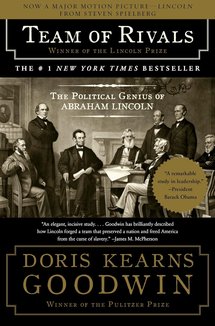
Team of Rivals: The Political Genius of Abraham Lincoln
Author:
Doris Kearns Goodwin
One of the most influential books of the past fifty years, Team of Rivals is Pulitzer Prize–winning author and esteemed presidential historian Doris Kearns Goodwin’s modern classic about the political genius of Abraham Lincoln, his unlikely presidency, and his cabinet of former political foes. Winner of the prestigious Lincoln Prize and the inspiration for the Oscar Award winning–film Lincoln , starring Daniel Day-Lewis, directed by Steven Spielberg, and written by Tony Kushner.
One of the most influential books of the past fifty years, Team of Rivals is Pulitzer Prize–winning author and esteemed presidential historian Doris Kearns Goodwin’s modern classic about the political genius of Abraham Lincoln, his unlikely presidency, and his cabinet of former political foes. Winner of the prestigious Lincoln Prize and the inspiration for the Oscar Award winning–film Lincoln , starring Daniel Day-Lewis, directed by Steven Spielberg, and written by Tony Kushner. On May 18, 1860, William H. Seward, Salmon P. Chase, Edward Bates, and Abraham Lincoln waited in their hometowns for the results from the Republican National Convention in Chicago. When Lincoln emerged as the victor, his rivals were dismayed and angry. Throughout the turbulent 1850s, each had energetically sought the presidency as the conflict over slavery was leading inexorably to secession and civil war. That Lincoln succeeded, Goodwin demonstrates, was the result of a character that had been forged by experiences that raised him above his more privileged and accomplished rivals. He won because he possessed an extraordinary ability to put himself in the place of other men, to experience what they were feeling, to understand their motives and desires. It was this capacity that enabled Lincoln as president to bring his disgruntled opponents together, create the most unusual cabinet in history, and marshal their talents to the task of preserving the Union and winning the war. We view the long, horrifying struggle from the vantage of the White House as Lincoln copes with incompetent generals, hostile congressmen, and his raucous cabinet. He overcomes these obstacles by winning the respect of his former competitors, and in the case of Seward, finds a loyal and crucial friend to see him through. This brilliant multiple biography is centered on Lincoln's mastery of men and how it shaped the most significant presidency in the nation's history.
Find this book on:


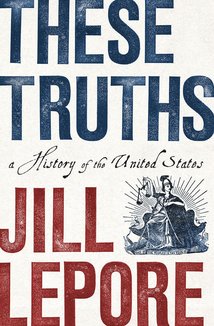
These Truths: A History of the United States
Author:
Jill Lepore
New York Times Bestseller In the most ambitious one volume American history in decades, award winning historian and New Yorker writer Jill Lepore offers a magisterial account of the origins and rise of a divided nation, an urgently needed reckoning with the beauty and tragedy of American history. Written in elegiac prose, Lepore’s groundbreaking investigation places truth itself―a devotion to facts, proof, and evidence―at the center of the nation’s history.
New York Times Bestseller In the most ambitious one volume American history in decades, award winning historian and New Yorker writer Jill Lepore offers a magisterial account of the origins and rise of a divided nation, an urgently needed reckoning with the beauty and tragedy of American history. Written in elegiac prose, Lepore’s groundbreaking investigation places truth itself―a devotion to facts, proof, and evidence―at the center of the nation’s history. The American experiment rests on three ideas―"these truths," Jefferson called them―political equality, natural rights, and the sovereignty of the people. And it rests, too, on a fearless dedication to inquiry, Lepore argues, because self government depends on it. But has the nation, and democracy itself, delivered on that promise? These Truths tells this uniquely American story, beginning in 1492, asking whether the course of events over more than five centuries has proven the nation’s truths, or belied them. To answer that question, Lepore traces the intertwined histories of American politics, law, journalism, and technology, from the colonial town meeting to the nineteenth century party machine, from talk radio to twenty first century Internet polls, from Magna Carta to the Patriot Act, from the printing press to Facebook News. Along the way, Lepore’s sovereign chronicle is filled with arresting sketches of both well known and lesser known Americans, from a parade of presidents and a rogues’ gallery of political mischief makers to the intrepid leaders of protest movements, including Frederick Douglass, the famed abolitionist orator; William Jennings Bryan, the three time presidential candidate and ultimately tragic populist; Pauli Murray, the visionary civil rights strategist; and Phyllis Schlafly, the uncredited architect of modern conservatism. Americans are descended from slaves and slave owners, from conquerors and the conquered, from immigrants and from people who have fought to end immigration. "A nation born in contradiction will fight forever over the meaning of its history," Lepore writes, but engaging in that struggle by studying the past is part of the work of citizenship. "The past is an inheritance, a gift and a burden," These Truths observes. "It can’t be shirked. There’s nothing for it but to get to know it." 127 illustrations
Find this book on:
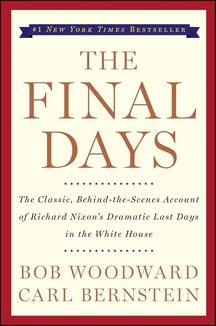
The Final Days
Author:
Bob Woodward
“An extraordinary work of reportage on the epic political story of our time” ( Newsweek )—from Bob Woodward and Carl Bernstein, Pulitzer Prize-winning coauthors of All the President’s Men . The Final Days is the #1 New York Times bestselling, classic, behind-the-scenes account of Richard Nixon’s dramatic last months as president.
“An extraordinary work of reportage on the epic political story of our time” ( Newsweek )—from Bob Woodward and Carl Bernstein, Pulitzer Prize-winning coauthors of All the President’s Men . The Final Days is the #1 New York Times bestselling, classic, behind-the-scenes account of Richard Nixon’s dramatic last months as president. Moment by moment, Bernstein and Woodward portray the taut, post-Watergate White House as Nixon, his family, his staff, and many members of Congress strained desperately to prevent his inevitable resignation. This brilliant book reveals the ordeal of Nixon’s fall from office—one of the gravest crises in presidential history.
Find this book on:
Episode overview
President Trump’s actions against transgender Americans have been stunningly wide-ranging. They’ve also been popular.
Trump has sought new restrictions on trans people in sports, schools, the military, prisons and medical care, and in government documentation. And a recent poll found that a majority of Americans approve of how Mr. Trump is handling trans issues — far above how he is handling his presidency generally. On trans-related issues, Americans’ opinions have moved right since 2022. What led the trans-rights movement to suffer not just a major electoral loss, but also a sweeping loss of public support?
Sarah McBride is a freshman congresswoman from Delaware, where she was previously a state senator. And she is the first openly transgender member of Congress. In our conversation, Representative McBride reckons with the trans rights movement’s shortcomings, what liberalism should look like in a profoundly illiberal time and how to win hearts and minds through a politics of “grace.” It’s the most stirring defense of the practice of politics — with all its compromises and disappointments and frustrations — I’ve heard in some time.
This episode contains strong language.