
From this episode
Recommended books
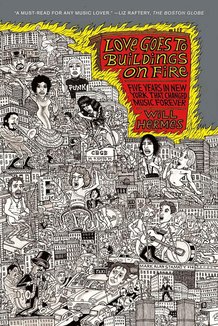
A vivid, dramatic account of how half a dozen kinds of modern music--punk rock, art rock, disco, salsa, rap, minimalist classical--emerged in new forms and cross-pollinated all at once in the middle seventies in NYC. Punk rock and hip-hop.
A vivid, dramatic account of how half a dozen kinds of modern music--punk rock, art rock, disco, salsa, rap, minimalist classical--emerged in new forms and cross-pollinated all at once in the middle seventies in NYC. Punk rock and hip-hop. Disco and salsa. The loft jazz scene and the downtown composers known as Minimalists. In the mid-1970s, New York City was a laboratory where all the major styles of modern music were reinvented―block by block, by musicians who knew, admired, and borrowed from one another. Crime was everywhere, the government was broke, and the infrastructure was collapsing. But rent was cheap, and the possibilities for musical exploration were limitless. Will Hermes's Love Goes to Buildings on Fire is the first book to tell the full story of the era's music scenes and the phenomenal and surprising ways they intersected. From New Year's Day 1973 to New Year's Eve 1977, the book moves panoramically from post-Dylan Greenwich Village, to the arson-scarred South Bronx barrios where salsa and hip-hop were created, to the lower Manhattan lofts where jazz and classical music were reimagined, to ramshackle clubs like CBGB and the Gallery, where rock and dance music were hot-wired for a new generation.
Find this book on:


The Buddha in the Attic (Pen/Faulkner Award - Fiction)
Author:
Julie Otsuka
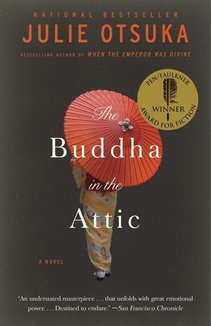
NATIONAL BESTSELLER • PEN/FAULKER AWARD WINNER • The acclaimed author of The Swimmers and When the Emperor Was Divine tells the story of a group of young women brought from Japan to San Francisco as “picture brides” a century ago in this "understated masterpiece ... that unfolds with great emotional power" ( San Francisco Chronicle ).
NATIONAL BESTSELLER • PEN/FAULKER AWARD WINNER • The acclaimed author of The Swimmers and When the Emperor Was Divine tells the story of a group of young women brought from Japan to San Francisco as “picture brides” a century ago in this "understated masterpiece ... that unfolds with great emotional power" ( San Francisco Chronicle ). In eight unforgettable sections, The Buddha in the Attic traces the extraordinary lives of these women, from their arduous journeys by boat, to their arrival in San Francisco and their tremulous first nights as new wives; from their experiences raising children who would later reject their culture and language, to the deracinating arrival of war. Julie Otsuka has written a spellbinding novel about identity and loyalty, and what it means to be an American in uncertain times.
Find this book on:
When the Emperor Was Divine
Author:
Julie Otsuka
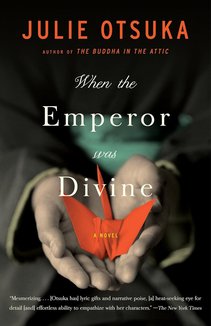
F rom the bestselling, award-winning author of The Buddha in the Attic and The Swimmers, this commanding debut novel paints a portrait of the Japanese American incarceration camps that is both a haunting evocation of a family in wartime and a resonant lesson for our times. On a sunny day in Berkeley, California, in 1942, a woman sees a sign in a post office window, returns to her home, and matter-of-factly begins to pack her family's possessions.
F rom the bestselling, award-winning author of The Buddha in the Attic and The Swimmers, this commanding debut novel paints a portrait of the Japanese American incarceration camps that is both a haunting evocation of a family in wartime and a resonant lesson for our times. On a sunny day in Berkeley, California, in 1942, a woman sees a sign in a post office window, returns to her home, and matter-of-factly begins to pack her family's possessions. Like thousands of other Japanese Americans they have been reclassified, virtually overnight, as enemy aliens and are about to be uprooted from their home and sent to a dusty incarceration camp in the Utah desert. In this lean and devastatingly evocative first novel, Julie Otsuka tells their story from five flawlessly realized points of view and conveys the exact emotional texture of their experience: the thin-walled barracks and barbed-wire fences, the omnipresent fear and loneliness, the unheralded feats of heroism. When the Emperor Was Divine is a work of enormous power that makes a shameful episode of our history as immediate as today's headlines.
Find this book on:
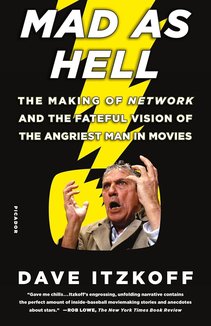
"Dave Itzkoff takes us on an extraordinary journey, and in the process reveals Chayefsky's prognosis for TV, a prognosis we've chosen to ignore even as it's come true before our eyes."― Forbes "I'm mad as hell, and I'm not going to take this anymore!" Those words, spoken by an unhinged anchorman named Howard Beale, "the mad prophet of the airwaves," took America by storm in 1976, when Network became a sensation. With a superb cast (including Faye Dunaway, William Holden, Peter Finch, and Robert Duvall) directed by Sidney Lumet, the film won four Oscars and indelibly shaped how we think about corporate and media power.
"Dave Itzkoff takes us on an extraordinary journey, and in the process reveals Chayefsky's prognosis for TV, a prognosis we've chosen to ignore even as it's come true before our eyes."― Forbes "I'm mad as hell, and I'm not going to take this anymore!" Those words, spoken by an unhinged anchorman named Howard Beale, "the mad prophet of the airwaves," took America by storm in 1976, when Network became a sensation. With a superb cast (including Faye Dunaway, William Holden, Peter Finch, and Robert Duvall) directed by Sidney Lumet, the film won four Oscars and indelibly shaped how we think about corporate and media power. In Mad As Hell , Dave Itzkoff of The New York Times recounts the surprising and dramatic story of how Network made it to the screen, and of Paddy Chayefsky, the tough, driven, Oscar-winning screenwriter who envisioned a world―outlandish for its time―that is all too real today. Itzkoff vividly re-creates the action behind the camera at a time of swirling cultural turmoil. The result is a riveting account that enriches our appreciation of this prophetic and still-startling film.
Find this book on:
Episode overview
“If he got a thrill out of transforming these ill-gotten goods into legit merchandise, a zap-charge in his blood like he’d plugged into a socket, he was in control of it and not the other way around,” writes Colson Whitehead in his new novel, “Harlem Shuffle.” “Dizzying and powerful as it was. Everyone had secret corners and alleys that no one else saw — what mattered were your major streets and boulevards, the stuff that showed up on other people’s maps of you.”
Whitehead is the author of “The Underground Railroad,” which won the Pulitzer Prize and the National Book Award, and “The Nickel Boys,” which also won a Pulitzer, the first time two consecutive books by an author won. But he actually started “Harlem Shuffle” in between those two books. And now that he’s finished it, he can’t quite put it down. He’s working on a sequel, he told me. The first time he’s tried one.
“Harlem Shuffle” is both a joyous and a troubled book. It’s built around Ray Carney, a furniture salesman and fence for stolen goods, and a series of capers around 1960s-era Harlem. But at its core it’s about patrimony, capitalism, ambition, race and the moral costs of striving in an unjust system.
We talk about all that, and more: how Marvel Comics made Whitehead want to be a writer, how parenthood changed him, why he hopes to distill it all down to a haiku, whether the writing world is a just or unjust system, the nature of zombies, the nonfiction of the late-Aughts internet, the legacy of 9/11, his favorite heist movies, what his wife thinks his characters know that he doesn’t — and I could keep going.
This one’s a fun one.