From this episode
Recommended books
The Jesuits: A History
Authors:
Markus Friedrich,
John Noël Dillon
The most comprehensive and up-to-date exploration of one of the most important religious orders in the modern world Since its founding by Ignatius of Loyola in 1540, the Society of Jesus―more commonly known as the Jesuits―has played a critical role in the events of modern history. From the Counter-Reformation to the ascent of Francis I as the first Jesuit pope, The Jesuits presents an intimate look at one of the most important religious orders not only in the Catholic Church, but also the world.
The most comprehensive and up-to-date exploration of one of the most important religious orders in the modern world Since its founding by Ignatius of Loyola in 1540, the Society of Jesus―more commonly known as the Jesuits―has played a critical role in the events of modern history. From the Counter-Reformation to the ascent of Francis I as the first Jesuit pope, The Jesuits presents an intimate look at one of the most important religious orders not only in the Catholic Church, but also the world. Markus Friedrich describes an organization that has deftly walked a tightrope between sacred and secular involvement and experienced difficulties during changing times, all while shaping cultural developments from pastoral care and spirituality to art, education, and science. Examining the Jesuits in the context of social, cultural, and world history, Friedrich sheds light on how the order shaped the culture of the Counter-Reformation and participated in the establishment of European empires, including missionary activity throughout Asia and in many parts of Africa in the sixteenth and seventeenth centuries. He also explores the place of Jesuits in the New World and addresses the issue of Jesuit slaveholders. The Jesuits often tangled with the Roman Curia and the pope, resulting in their suppression in 1773, but the order returned in 1814 to rise again to a powerful position of influence. Friedrich demonstrates that the Jesuit fathers were not a monolithic group and he considers the distinctive spiritual legacy inherited by Pope Francis. With its global scope and meticulous attention to archival sources and previous scholarship, The Jesuits illustrates the heterogeneous, varied, and contradictory perspectives of this famed religious organization.
Find this book on:


Last and First Men: A Story of the near and far future
Author:
Olaf Stapledon
Last and First Men: A Story of the Near and Far Future is a "future history" science fiction novel written in 1930 by the British author Olaf Stapledon. A work of unprecedented scale in the genre, it describes the history of humanity from the present onwards across two billion years and eighteen distinct human species, of which our own is the first and most primitive.
Last and First Men: A Story of the Near and Far Future is a "future history" science fiction novel written in 1930 by the British author Olaf Stapledon. A work of unprecedented scale in the genre, it describes the history of humanity from the present onwards across two billion years and eighteen distinct human species, of which our own is the first and most primitive. Stapledon's conception of history is based on the Hegelian Dialectic, following a repetitive cycle with many varied civilizations rising from and descending back into savagery over millions of years, but it is also one of progress, as the later civilizations rise to far greater heights than the first. The book anticipates the science of genetic engineering, and is an early example of the fictional supermind; a consciousness composed of many telepathically-linked individuals. A controversial part of the book depicts humans, in the far-off future, escaping the dying Earth and settling on Venus — in the process totally exterminating its native inhabitants, an intelligent marine species. Stapledon's book has been interpreted by some as condoning such interplanetary genocide as a justified act if necessary for racial survival, though a number of Stapledon's partisans denied that such was his intention, arguing instead that Stapledon was merely showing that although mankind had advanced in a number of ways in the future, at bottom it still possessed the same capacity for savagery as it has always had.
Find this book on:
Disturbing The Universe (Sloan Foundation Science Series)
Author:
Freeman Dyson
The autobiography of one of the world's greatest scientists Spanning the years from World War II, when he was a civilian statistician in the operations research section of the Royal Air Force Bomber Command, through his studies with Hans Bethe at Cornell University, his early friendship with Richard Feynman, and his postgraduate work with J. Robert Oppenheimer, Freeman Dyson has composed an autobiography unlike any other.
The autobiography of one of the world's greatest scientists Spanning the years from World War II, when he was a civilian statistician in the operations research section of the Royal Air Force Bomber Command, through his studies with Hans Bethe at Cornell University, his early friendship with Richard Feynman, and his postgraduate work with J. Robert Oppenheimer, Freeman Dyson has composed an autobiography unlike any other. Dyson evocatively conveys the thrill of a deep engagement with the world-be it as scientist, citizen, student, or parent. Detailing a unique career not limited to his groundbreaking work in physics, Dyson discusses his interest in minimizing loss of life in war, in disarmament, and even in thought experiments on the expansion of our frontiers into the galaxies.
Find this book on:
Episode overview
In just a few years, the narrative on China has almost completely flipped. The dominant sentiments in America had been awe, envy and a kind of fear. China’s growth seemed relentless. Its manufacturing prowess was lapping ours. It weathered the pandemic without the mass death seen in the West. It could build housing and transit and infrastructure at a speed we could no longer even imagine.
And then, as 2022 ticked over to 2023, things changed. China’s real estate bubble popped. Its Zero Covid policies turned pathological. Its leader, Xi Jinping, turned what many saw as a technocracy with autocratic characteristics into something closer to a plain old autocracy. Foreign investors began looking to diversify. Companies that had long relied on China, like Apple, began trying in earnest to build manufacturing chains elsewhere. And under President Biden, American policy toward China began to match Trumpian rhetoric toward China: Slowing China’s rise, and building America’s ability to manufacture crucial goods, became central goals.
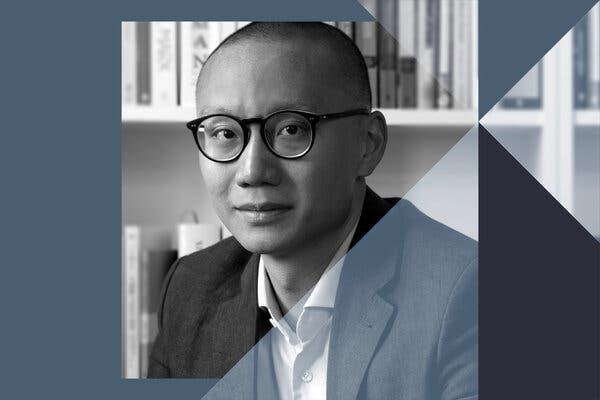
So what’s true about China right now? Which of these narratives, if any, hold water? Dan Wang is the technology analyst at Gavekal Dragonomics and a visiting scholar at Yale Law School’s Paul Tsai China Center. He focuses particularly on the core vector of U.S.-China competition: technological innovation and manufacturing prowess. Each year, his annual letter about what China can do, and how it does it, is eagerly awaited by many in the United States who are trying to understand that nation’s rise. In 2020 and 2021, those letters were profoundly bullish on China. In 2022, his sentiments turned. And so I wanted to explore the various sides of the China story with him.