
From this episode
Recommended books
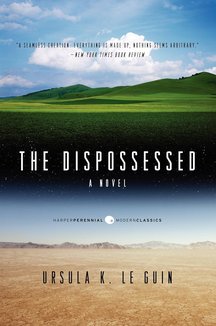
The Dispossessed: A Novel (Hainish Cycle)
Authors:
Ursula K. Le Guin,
Karen Joy Fowler
One of The Atlantic ’s Great American Novels “One of the greats. .
One of The Atlantic ’s Great American Novels “One of the greats. . . . Not just a science fiction writer; a literary icon.” — Stephen King “Engrossing . . . Ursula Le Guin is more than just a writer of adult fantasy and science fiction . . . she is a philosopher; an explorer in the landscapes of the mind.” — Cincinnati Enquirer Ursula K. Le Guin’s Hugo, Locus, and Nebula Award–winning classic, a profound and thoughtful tale of anarchism and capitalism, individualism and collectivism, and one ambitious man’s quest to bridge the ideological chasm separating two worlds. The Dispossessed is the spellbinding story of anarchist Shevek, the “galactically famous scientist,” who single-handedly attempts to reunite two planets cut off from each other by centuries of distrust. Anarres, Shevek’s homeland, is a bleak moon settled by an anarchic utopian civilization, where there is no government, and everyone, at least nominally, is a revolutionary. It has long been isolated from other worlds, including its mother planet, Urras—defined by warring nations, great poverty, and immense wealth. Now Shevek, a brilliant physicist, is determined to unify the two civilizations. In the face of great hostility, outright threats, and the pain of separation from his family, he makes an unprecedented trip to Urras. Greater than any concern for his own wellbeing is the belief that the walls of hatred, distrust, and philosophic division between his planet and the rest of the civilized universe must be torn down. He will seek answers, question the unquestionable, and explore differences in customs and cultures, determined to tear down the walls of hatred that have kept them apart. To visit Urras—to learn, to teach, to share—will require great sacrifice and risks, which Shevek willingly accepts. Almost immediately upon his arrival, he finds not the egotistical philistines he expected, but an intelligent, complex people who warmly welcome him. But soon the ambitious scientist and his gift is seen as a threat, and in the profound conflict that ensues, he must reexamine his beliefs even as he ignites the fires of change.
Find this book on:

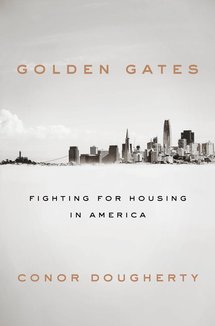
Golden Gates: Fighting for Housing in America
Author:
Conor Dougherty
A Time 100 Must-Read Book of 2020 • A New York Times Book Review Editors' Choice • California Book Award Silver Medal in Nonfiction • Finalist for The New York Public Library Helen Bernstein Book Award for Excellence in Journalism • Named a top 30 must-read Book of 2020 by the New York Post • Named one of the 10 Best Business Books of 2020 by Fortune • Named A Must-Read Book of 2020 by Apartment Therapy • Runner-Up General Nonfiction: San Francisco Book Festival • A Planetizen Top Urban Planning Book of 2020 • Shortlisted for the Goddard Riverside Stephan Russo Book Prize for Social Justice “Tells the story of housing in all its complexity.” —NPR Spacious and affordable homes used to be the hallmark of American prosperity. Today, however, punishing rents and the increasingly prohibitive cost of ownership have turned housing into the foremost symbol of inequality and an economy gone wrong.
A Time 100 Must-Read Book of 2020 • A New York Times Book Review Editors' Choice • California Book Award Silver Medal in Nonfiction • Finalist for The New York Public Library Helen Bernstein Book Award for Excellence in Journalism • Named a top 30 must-read Book of 2020 by the New York Post • Named one of the 10 Best Business Books of 2020 by Fortune • Named A Must-Read Book of 2020 by Apartment Therapy • Runner-Up General Nonfiction: San Francisco Book Festival • A Planetizen Top Urban Planning Book of 2020 • Shortlisted for the Goddard Riverside Stephan Russo Book Prize for Social Justice “Tells the story of housing in all its complexity.” —NPR Spacious and affordable homes used to be the hallmark of American prosperity. Today, however, punishing rents and the increasingly prohibitive cost of ownership have turned housing into the foremost symbol of inequality and an economy gone wrong. Nowhere is this more visible than in the San Francisco Bay Area, where fleets of private buses ferry software engineers past the tarp-and-plywood shanties of the homeless. The adage that California is a glimpse of the nation’s future has become a cautionary tale. With propulsive storytelling and ground-level reporting, New York Times journalist Conor Dougherty chronicles America’s housing crisis from its West Coast epicenter, peeling back the decades of history and economic forces that brought us here and taking readers inside the activist movements that have risen in tandem with housing costs.
Find this book on:

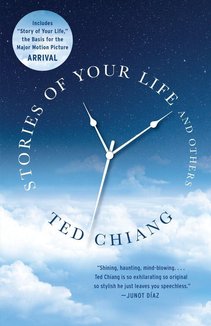
Stories of Your Life and Others
Author:
Ted Chiang
From the author of Exhalation , an award-winning short story collection that blends "absorbing storytelling with meditations on the universe, being, time and space ... raises questions about the nature of reality and what it is to be human" ( The New York Times).
From the author of Exhalation , an award-winning short story collection that blends "absorbing storytelling with meditations on the universe, being, time and space ... raises questions about the nature of reality and what it is to be human" ( The New York Times). Stories of Your Life and Others delivers dual delights of the very, very strange and the heartbreakingly familiar, often presenting characters who must confront sudden change—the inevitable rise of automatons or the appearance of aliens—with some sense of normalcy. With sharp intelligence and humor, Chiang examines what it means to be alive in a world marked by uncertainty, but also by beauty and wonder. An award-winning collection from one of today's most lauded writers, Stories of Your Life and Others is a contemporary classic. Includes “Story of Your Life”—the basis for the major motion picture Arrival
Find this book on:
Episode overview
Joe Biden’s economic agenda is centered on a basic premise: The United States needs to build. To build roads and bridges. To build child care facilities and car-charging stations. To build public transit and affordable housing. And in doing so, to build a better future for everyone.
But there’s a twist of irony in that vision. Because right now, even in places where Democrats hold control over government, they are consistently failing to build cheaply, quickly and equitably. In recent decades, blue states and cities from Los Angeles to Boston to New York have become known for their outrageously expensive housing, massive homeless populations and infrastructure projects marred by major delays and cost overruns — all stemming from this fundamental inability to actually build.
Jerusalem Demsas is a policy reporter at Vox who covers a range of issues from housing to transportation. And the central question her work asks is this: Why is the party that ostensibly supports big government doing ambitious things constantly failing to do just that, even in the places where it holds the most power?
So this is a conversation about the policy areas where blue city and state governance is failing the most: housing, homelessness, infrastructure. But it is also about the larger problems that those failures reveal: The tension between big-government liberalism and anti-corporatist progressivism; the cognitive dissonance between what city-dwelling, college-educated liberals say they believe and their inequality-amplifying actions; how reforms intended to make government more accountable to the people have been wielded by special interests to stall or kill popular projects; and much more.