
From this episode
Recommended books

Histories of the Transgender Child
Author:
Jules Gill-Peterson
A groundbreaking twentieth-century history of transgender children With transgender rights front and center in American politics, media, and culture, the pervasive myth still exists that today’s transgender children are a brand new generation—pioneers in a field of new obstacles and hurdles. Histories of the Transgender Child shatters this myth, uncovering a previously unknown twentieth-century history when transgender children not only existed but preexisted the term transgender and its predecessors, playing a central role in the medicalization of trans people, and all sex and gender.
A groundbreaking twentieth-century history of transgender children With transgender rights front and center in American politics, media, and culture, the pervasive myth still exists that today’s transgender children are a brand new generation—pioneers in a field of new obstacles and hurdles. Histories of the Transgender Child shatters this myth, uncovering a previously unknown twentieth-century history when transgender children not only existed but preexisted the term transgender and its predecessors, playing a central role in the medicalization of trans people, and all sex and gender. Beginning with the early 1900s when children with “ambiguous” sex first sought medical attention, to the 1930s when transgender people began to seek out doctors involved in altering children’s sex, to the invention of the category gender, and finally the 1960s and ’70s when, as the field institutionalized, transgender children began to take hormones, change their names, and even access gender confirmation, Julian Gill-Peterson reconstructs the medicalization and racialization of children’s bodies. Throughout, they foreground the racial history of medicine that excludes black and trans of color children through the concept of gender’s plasticity, placing race at the center of their analysis and at the center of transgender studies. Until now, little has been known about early transgender history and life and its relevance to children. Using a wealth of archival research from hospitals and clinics, including incredible personal letters from children to doctors, as well as scientific and medical literature, this book reaches back to the first half of the twentieth century—a time when the category transgender was not available but surely existed, in the lives of children and parents.
Find this book on:


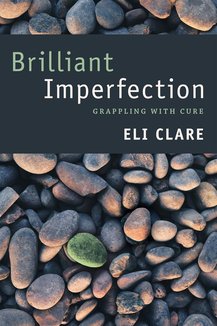
Brilliant Imperfection: Grappling with Cure
Author:
Eli Clare
In Brilliant Imperfection Eli Clare uses memoir, history, and critical analysis to explore cure—the deeply held belief that body-minds considered broken need to be fixed. Cure serves many purposes.
In Brilliant Imperfection Eli Clare uses memoir, history, and critical analysis to explore cure—the deeply held belief that body-minds considered broken need to be fixed. Cure serves many purposes. It saves lives, manipulates lives, and prioritizes some lives over others. It provides comfort, makes profits, justifies violence, and promises resolution to body-mind loss. Clare grapples with this knot of contradictions, maintaining that neither an anti-cure politics nor a pro-cure worldview can account for the messy, complex relationships we have with our body-minds. The stories he tells range widely, stretching from disability stereotypes to weight loss surgery, gender transition to skin lightening creams. At each turn, Clare weaves race, disability, sexuality, class, and gender together, insisting on the nonnegotiable value of body-mind difference. Into this mix, he adds environmental politics, thinking about ecosystem loss and restoration as a way of delving more deeply into cure. Ultimately Brilliant Imperfection reveals cure to be an ideology grounded in the twin notions of normal and natural , slippery and powerful, necessary and damaging all at the same time.
Find this book on:
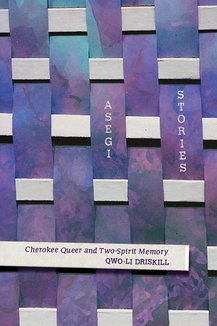
Asegi Stories: Cherokee Queer and Two-Spirit Memory
Author:
Qwo-Li Driskill
In Cherokee Asegi udanto refers to people who either fall outside of men’s and women’s roles or who mix men’s and women’s roles. Asegi , which translates as “strange,” is also used by some Cherokees as a term similar to “queer.” For author Qwo-Li Driskill, asegi provides a means by which to reread Cherokee history in order to listen for those stories rendered “strange” by colonial heteropatriarchy.
In Cherokee Asegi udanto refers to people who either fall outside of men’s and women’s roles or who mix men’s and women’s roles. Asegi , which translates as “strange,” is also used by some Cherokees as a term similar to “queer.” For author Qwo-Li Driskill, asegi provides a means by which to reread Cherokee history in order to listen for those stories rendered “strange” by colonial heteropatriarchy. As the first full-length work of scholarship to develop a tribally specific Indigenous Queer or Two-Spirit critique, Asegi Stories examines gender and sexuality in Cherokee cultural memory, how they shape the present, and how they can influence the future. The theoretical and methodological underpinnings of Asegi Stories derive from activist, artistic, and intellectual genealogies, referred to as “dissent lines” by Maori scholar Linda Tuhiwai Smith. Driskill intertwines Cherokee and other Indigenous traditions, women of color feminisms, grassroots activisms, queer and Trans studies and politics, rhetoric, Native studies, and decolonial politics. Drawing from oral histories and archival documents in order to articulate Cherokee-centered Two-Spirit critiques, Driskill contributes to the larger intertribal movements for social justice.
Find this book on:
Episode overview
It’s hard to think of anything changing more quickly in our society right now than our understanding of gender. There’s an explosion of young people identifying as gender nonconforming in some way or another, and others are coming out as transgender or nonbinary throughout their lives, from childhood to old age. But this sea change has brought with it an enormous amount of confusion and resistance. As of July, lawmakers in 21 states had introduced bills that focus on restricting gender-affirming medical care for transgender youth, such as hormone blockers, and 29 states had introduced bills banning transgender youth from sports. But we also know that the degree of support a young person receives when coming out — or doesn’t — can have profound consequences for their mental health.
How should we process and understand this moment in gender? Kathryn Bond Stockton is a distinguished professor of English focusing on gender studies at the University of Utah and the author of the book “Gender(s).” She is incredibly skilled at explaining the fundamentals — and complexities — of what gender means and how people, including Stockton herself, have wrestled with it. In this conversation, we discuss:
- Why and how Stockton has always felt out of place as a woman
- How her entry to the evangelical church actually advanced her acceptance of her gender
- Why gender is “queer” for all of us, regardless of how we identify or how much we think about it
- The ways that we perform our genders without even knowing we’re doing it
- How the choices parents make concerning things as seemingly banal as clothing and toys shape children’s gender identities
- How an expanded sense of gender can bring pain as well as pleasure and playfulness
- What Stockton has learned from discussions about gender roles with Mormon students in her Utah classrooms
- What we would gain — and possibly lose — if we were to loosen social categories of gender
- Why Pride celebrations can be so utopian
And much more.