
From this episode
Recommended books
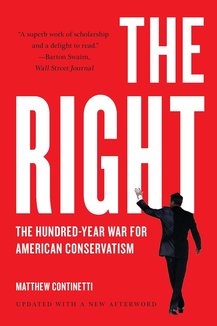
The Right: The Hundred-Year War for American Conservatism
Author:
Matthew Continetti
A “superb” and “ambitious” ( New York Times ) intellectual and political history of the last century of American conservatism When most people think of modern conservatism, they think of Ronald Reagan. Yet this narrow view leaves many to question: How did Donald Trump win the presidency?
A “superb” and “ambitious” ( New York Times ) intellectual and political history of the last century of American conservatism When most people think of modern conservatism, they think of Ronald Reagan. Yet this narrow view leaves many to question: How did Donald Trump win the presidency? And what is the future of the Republican Party? In The Right , Matthew Continetti gives a sweeping account of movement conservatism’s evolution, from the Progressive Era through the present. He tells the story of how conservatism began as networks of intellectuals, developing and institutionalizing a vision that grew over time, only to see their creation buckle under new pressures from national populist movements. Drawing out the tensions between the desire for mainstream acceptance and the pull of extremism, Continetti argues that the more one studies conservatism’s past, the more one becomes convinced of its future. Updated with a new epilogue, The Right is essential reading for anyone looking to understand American conservatism.
Find this book on:

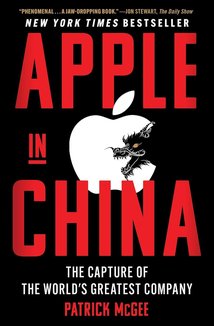
Apple in China: The Capture of the World's Greatest Company
Author:
Patrick McGee
“Phenomenal…a jaw-dropping book.” —Jon Stewart, The Daily Show Named by The New York Times , The New Yorker , and Prospect magazine as a best book of the year, this “scrupulously reported” ( The New Yorker ) and “astonishing” ( The Daily Telegraph , London ) book rivets with its portrayal of how Apple allowed itself to become dependent on China for a huge percentage of its manufacturing, making it vulnerable and unwittingly laying the groundwork for the Asian superpower to rival the US in technological expertise. After struggling to build products on three continents, Apple turned to China’s seemingly endless supply of cheap labor.
“Phenomenal…a jaw-dropping book.” —Jon Stewart, The Daily Show Named by The New York Times , The New Yorker , and Prospect magazine as a best book of the year, this “scrupulously reported” ( The New Yorker ) and “astonishing” ( The Daily Telegraph , London ) book rivets with its portrayal of how Apple allowed itself to become dependent on China for a huge percentage of its manufacturing, making it vulnerable and unwittingly laying the groundwork for the Asian superpower to rival the US in technological expertise. After struggling to build products on three continents, Apple turned to China’s seemingly endless supply of cheap labor. It soon deployed thousands of engineers, trained millions of workers, and invested hundreds of billions of dollars to create the most advanced global supply chain. These efforts fueled the iPhone’s dominance—but also laid the foundation for a powerful, state-supported Chinese electronics industry. What began as a business decision evolved into a cautionary tale of global trade, tech rivalry, and national security. Without intending to, Apple helped Beijing acquire technological influence that could now be weaponized—a central concern in the ongoing US-China tech war. Drawing on over two hundred interviews, Patrick McGee exposes never-before-reported details from Silicon Valley to Shenzhen: internal emails, secretive executive meetings, and overlooked voices inside the company’s China operations. You’ll meet the “Gang of Eight” executives tasked with appeasing Beijing, a Mormon missionary who launched Apple retail in China, and a veteran whose dreams of improving factory conditions were crushed by both Apple’s demands and Xi Jinping’s authoritarian crackdown. From Foxconn and Tim Cook to the Chinese Communist Party and Taiwan Semiconductor, this is a revelatory look at how Apple, in seeking efficiency, became entangled in the very politics it once claimed to challenge. For readers of Chip War , American Factory , and The Big Short , Apple in China is a searing examination of corporate power, Chinese nationalism, deglobalization, and the fragile relationship between Silicon Valley and the world’s rising superpower.
Find this book on:
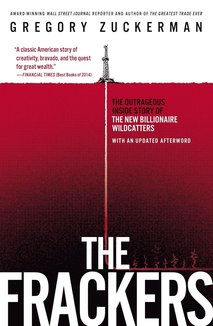
The Frackers: The Outrageous Inside Story of the New Billionaire Wildcatters
Author:
Gregory Zuckerman
“A lively, exciting, and definitely thought-provoking book.” — Booklist Things looked grim for American energy in 2006, but a handful of wildcatters were determined to tap massive deposits of oil and gas that giants like Exxon and Chevron had ignored. They risked everything on a new process called fracking.
“A lively, exciting, and definitely thought-provoking book.” — Booklist Things looked grim for American energy in 2006, but a handful of wildcatters were determined to tap massive deposits of oil and gas that giants like Exxon and Chevron had ignored. They risked everything on a new process called fracking. Within a few years, they solved America’s dependence on imported energy, triggered a global environmental controversy, and made and lost astonishing fortunes. No one understands the frackers—their ambitions, personalities, and foibles—better than Wall Street Journal reporter Gregory Zuckerman. His exclusive access drives this dramatic narrative, which stretches from North Dakota to Texas to Wall Street.
Find this book on:
Episode overview
President Trump doesn’t seem to care that much about winning the midterms. He’s more unpopular at this point in his second term than basically any of his modern predecessors. Democrats seem poised to retake the House and have a real chance of retaking the Senate. You might expect a president in that position to pivot to the center, to focus on voters’ top concerns and try to boost the strongest Republicans in key races.
Trump isn’t doing any of that. Instead, he announced a $1.8 billion slush fund to pay out “victims of lawfare,” he threatened to re-escalate the Iran war, and he intervened in Republican primaries in ways that are gifts to Democrats, like endorsing the scandal-plagued Ken Paxton over the incumbent, John Cornyn, in Texas’ Senate race.
Why doesn’t Trump seem to care more about winning?
Liam Donovan is a Republican strategist and a president at Targeted Victory, a Washington public affairs and digital marketing firm. He has worked on the National Republican Senatorial Committee and for Cornyn. In this conversation, we discuss the moves Trump is making, the rough political environment for Republicans and what the paths to Democratic victories look like.