
From this episode
Recommended books
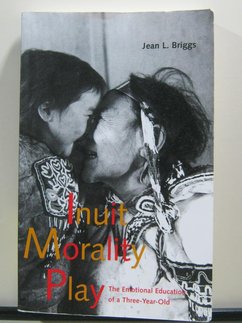
Inuit Morality Play: The Emotional Education of a Three-Year-Old
Author:
Jean L. Briggs
Psychological anthropologist Jean Briggs shows how Inuit adults use dramatic play to transmit cultural messages and moral lessons to their children "I could not be more enthusiastic about this brilliant book. .
Psychological anthropologist Jean Briggs shows how Inuit adults use dramatic play to transmit cultural messages and moral lessons to their children "I could not be more enthusiastic about this brilliant book. . . . A mesmerizing ethnography."—Nancy J. Chodorow "Is your mother good?" "Are you good?" "Do you want to come live with me?" Inuit adults often playfully present small children with difficult, even dangerous, choices and then dramatize the consequences of the child’s answers. They are enacting in larger-than-life form the plots that drive Inuit social life—testing, acting out problems, entertaining themselves, and, most of all, bringing up their children. In a riveting narrative, psychological anthropologist Jean L. Briggs takes us through six months of dramatic interactions in the life of Chubby Maata, a three-year-old girl growing up in a Baffin Island hunting camp. The book examines the issues that engaged the child—belonging, possession, love—and shows the process of her growing. Briggs questions the nature of "sharedness" in culture and assumptions about how culture is transmitted. She suggests that both cultural meanings and strong personal commitment to one’s world can be (and perhaps must be) acquired not by straightforwardly learning attitudes, rules, and habits in a dependent mode but by experiencing oneself as an agent engaged in productive conflict in emotionally problematic situations. Briggs finds that dramatic play is an essential force in Inuit social life. It creates and supports values; engenders and manages attachments and conflicts; and teaches and maintains an alert, experimental, constantly testing approach to social relationships.
Find this book on:



Eichmann in Jerusalem: A Report on the Banality of Evil (Penguin Classics)
Authors:
Hannah Arendt,
Amos Elon
The controversial journalistic analysis of the mentality that fostered the Holocaust, from the author of The Origins of Totalitarianism Sparking a flurry of heated debate, Hannah Arendt’s authoritative and stunning report on the trial of German Nazi leader Adolf Eichmann first appeared as a series of articles in The New Yorker in 1963. This revised edition includes material that came to light after the trial, as well as Arendt’s postscript directly addressing the controversy that arose over her account.
The controversial journalistic analysis of the mentality that fostered the Holocaust, from the author of The Origins of Totalitarianism Sparking a flurry of heated debate, Hannah Arendt’s authoritative and stunning report on the trial of German Nazi leader Adolf Eichmann first appeared as a series of articles in The New Yorker in 1963. This revised edition includes material that came to light after the trial, as well as Arendt’s postscript directly addressing the controversy that arose over her account. A major journalistic triumph by an intellectual of singular influence, Eichmann in Jerusalem is as shocking as it is informative—an unflinching look at one of the most unsettling (and unsettled) issues of the twentieth century.
Find this book on: