
From this episode
Recommended books
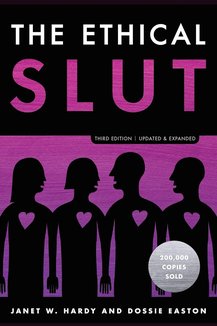
The Ethical Slut, Third Edition: A Practical Guide to Polyamory, Open Relationships, and Other Freedoms in Sex and Love
Authors:
Janet W. Hardy,
Dossie Easton
The classic guide to love, sex, and intimacy beyond the limits of conventional monogamy has been fully updated to reflect today’s modern attitudes and the latest information on nontraditional relationships. “One of the most useful relationship books you could ever read, no matter what your lifestyle choices.
The classic guide to love, sex, and intimacy beyond the limits of conventional monogamy has been fully updated to reflect today’s modern attitudes and the latest information on nontraditional relationships. “One of the most useful relationship books you could ever read, no matter what your lifestyle choices. It’s chock-full of great information about communication, jealousy, asking for what you want, and maintaining a relationship with integrity.”—Annie Sprinkle, PhD, sexologist and author of Dr. Sprinkle’s Spectacular Sex For 20 years The Ethical Slut —widely known as the “Poly Bible”—has dispelled myths and showed curious readers how to maintain a successful polyamorous lifestyle through open communication, emotional honesty, and safer sex practices. The third edition of this timeless guide to the ethics of relationships, communication, and sex has been revised to include: • Interviews with poly millennials (young people who have grown up without the prejudices their elders encountered regarding gender, orientation, sexuality, and relationships) • Tributes to polyamory pioneers • Tools for conflict resolution and instructions on how to improve interpersonal dynamics • New sidebars on topics such as asexuality, sex workers, LGBTQ terminology, and ways polys can connect and thrive The authors also include new content addressing nontraditional relationships beyond the polyamorous paradigm of “more than two”: couples who don't live together, couples who don't have sex with each other, nonparallel arrangements, couples with widely divergent sex styles, power disparities, and cross-orientation relationships, while utilizing nonbinary gender language and new terms that have come into common usage since the last edition.
Find this book on:



Berlin Diary
Author:
William L. Shirer
The author of the international bestseller The Rise and Fall of the Third Reich offers a personal account of life in Nazi Germany at the start of WWII. By the late 1930s, Adolf Hitler, Führer of the Nazi Party, had consolidated power in Germany and was leading the world into war.
The author of the international bestseller The Rise and Fall of the Third Reich offers a personal account of life in Nazi Germany at the start of WWII. By the late 1930s, Adolf Hitler, Führer of the Nazi Party, had consolidated power in Germany and was leading the world into war. A young foreign correspondent was on hand to bear witness. More than two decades prior to the publication of his acclaimed history, The Rise and Fall of the Third Reich, William L. Shirer was a journalist stationed in Berlin. During his years in the Nazi capital, he kept a daily personal diary, scrupulously recording everything he heard and saw before being forced to flee the country in 1940. Berlin Diary is Shirer’s first-hand account of the momentous events that shook the world in the mid-twentieth century, from the annexation of Austria and Czechoslovakia to the fall of Poland and France. A remarkable personal memoir of an extraordinary time, it chronicles the author’s thoughts and experiences while living in the shadow of the Nazi beast. Shirer recalls the surreal spectacles of the Nuremberg rallies, the terror of the late-night bombing raids, and his encounters with members of the German high command while he was risking his life to report to the world on the atrocities of a genocidal regime. At once powerful, engrossing, and edifying, William L. Shirer’s Berlin Diary is an essential historical record that illuminates one of the darkest periods in human civilization.
Find this book on:
Episode overview
Even if you don’t recognize the advice columnist Dan Savage by name, it’s possible that his ideas have influenced how you think about sex and relationships. For decades now, Savage has been arguing that our expectations for long-term partnerships are way too high; that healthy relationships are about acknowledging our vast spectrum of desires, not repressing them; and that monogamy is not the ideal setup for every partnership. Through over 30 years of writing “Savage Love,” one of the most widely read sex advice columns in the country, and more than 17 years of hosting the podcast “Savage Lovecast,” he has been one of America’s most subtly influential public intellectuals on the topic of how humans conduct our most intimate — and important — relationships.
In the past half-century or so, America’s culture around sex, dating and relationships has undergone a profound transformation. Women are no longer confined to roles as wives and mothers, same-sex marriage is legal, hookup culture has changed the way young people enter the dating world, and there has been a growing interest in less traditional approaches to relationships, like polyamory and ethical nonmonogamy. These transformations have ushered in a lot of new freedoms but also a lot of new anxieties and frustrations. So I wanted to bring Savage on the show to talk through how we navigate this complicated, messy moment in our relational and sexual lives.
We discuss how America’s relationship culture has changed in the past 30 years, why the myth of finding “the one” can be so damaging, what dating apps are (and aren’t) good for, how to give more grace to our partners when they do not meet our expectations, why so many feminist writers are re-evaluating the legacy of the sexual revolution, how gay sexual cultures have influenced straight dating life, why we’ve had a “sexual revolution” but not a concomitant “relationship revolution,” what Savage makes of the statistic that 18 percent of people have had sexual experiences outside their primary relationships without their partners’ consent, the advantages and risks of experimenting with nonmonogamy, what better sex education for young people should look like, why marriages between two men seem to end less frequently than heterosexual marriages do and more.
This episode contains strong language.