
From this episode
Recommended books
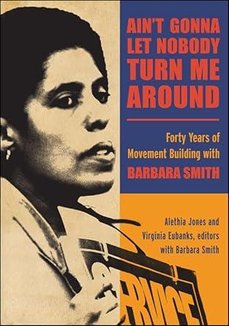
Ain't Gonna Let Nobody Turn Me Around: Forty Years of Movement Building with Barbara Smith (Suny New Political Science)
Authors:
Alethia Jones,
Virginia Eubanks,
Barbara Smith (With),
Barbara Smith PhD RN FACSM Faan
Silver Winner, 2014 ForeWord IndieFab Book of the Year Award in the Women's Studies Category 2015 Lambda Literary Award in Lesbian Memoir/Biography presented by the Lambda Literary Foundation 2015 Judy Grahn Award for Lesbian Nonfiction presented by the Publishing Triangle As an organizer, writer, publisher, scholar-activist, and elected official, Barbara Smith has played key roles in multiple social justice movements, including Civil Rights, feminism, lesbian and gay liberation, anti-racism, and Black feminism. Her four decades of grassroots activism forged collaborations that introduced the idea that oppression must be fought on a variety of fronts simultaneously, including gender, race, class, and sexuality.
Silver Winner, 2014 ForeWord IndieFab Book of the Year Award in the Women's Studies Category 2015 Lambda Literary Award in Lesbian Memoir/Biography presented by the Lambda Literary Foundation 2015 Judy Grahn Award for Lesbian Nonfiction presented by the Publishing Triangle As an organizer, writer, publisher, scholar-activist, and elected official, Barbara Smith has played key roles in multiple social justice movements, including Civil Rights, feminism, lesbian and gay liberation, anti-racism, and Black feminism. Her four decades of grassroots activism forged collaborations that introduced the idea that oppression must be fought on a variety of fronts simultaneously, including gender, race, class, and sexuality. By combining hard-to-find historical documents with new unpublished interviews with fellow activists, this book uncovers the deep roots of todays identity politics and intersectionality and serves as an essential primer for practicing solidarity and resistance.
Find this book on:

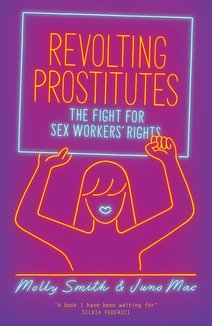
Revolting Prostitutes: The Fight for Sex Workers' Rights
Authors:
Juno Mac,
Molly Smith
How the law harms sex workers—and what they want instead Do you have to endorse prostitution in order to support sex worker rights? Should clients be criminalized, and can the police deliver justice?
How the law harms sex workers—and what they want instead Do you have to endorse prostitution in order to support sex worker rights? Should clients be criminalized, and can the police deliver justice? In Revolting Prostitutes , sex workers Juno Mac and Molly Smith bring a fresh perspective to questions that have long been contentious. Speaking from a growing global sex worker rights movement, and situating their argument firmly within wider questions of migration, work, feminism, and resistance to white supremacy, they make it clear that anyone committed to working towards justice and freedom should be in support of the sex worker rights movement.
Find this book on:
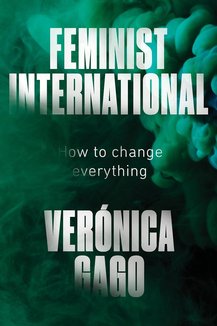
Feminist International: How to Change Everything
Authors:
Veronica Gago,
Liz Mason-Deese
Leader of Latin America’s powerful new women’s movement rethinks the meaning of feminist politics Recent years have seen massive feminist mobilizations in virtually every continent, overturning social mores and repressive legislation. In this brilliant and original look at the emerging feminist international, Verónica Gago explores how the women’s strike, as both a concept and collective experience, may be transforming the boundaries of politics as we know it.
Leader of Latin America’s powerful new women’s movement rethinks the meaning of feminist politics Recent years have seen massive feminist mobilizations in virtually every continent, overturning social mores and repressive legislation. In this brilliant and original look at the emerging feminist international, Verónica Gago explores how the women’s strike, as both a concept and collective experience, may be transforming the boundaries of politics as we know it. At once a gripping political analysis and a theoretically charged manifesto, Feminist International draws on the author’s rich experience with radical movements to enter into ongoing debates in feminist and Marxist theory: from social reproduction and domestic work to the intertwining of financial and gender violence, as well as controversies surrounding the neo-extractivist model of development, the possibilities and limits of left populism, and the ever-vexed nexus of gender-race-class. Gago asks what another theory of power might look like, one premised on our desire to change everything.
Find this book on:

Episode overview
“Feminists have long dreamed of sexual freedom,” writes Amia Srinivasan. “What they refuse to accept is its simulacrum: sex that is said to be free, not because it is equal, but because it is ubiquitous.”
Srinivasan is an Oxford philosopher who, in 2018, wrote the viral essay “Does Anyone Have the Right to Sex?” Her piece was inspired by Elliot Rodger’s murderous rampage and the misogynist manifesto he published to justify it. But Srinivasan’s inquiry opened out to larger questions about the relationship between sex and status, what happens when we’re undesired for unjust reasons and whether we can change our own preferences and passions. The task, as she frames it, is “not imagining a desire regulated by the demands of justice, but a desire set free from the binds of injustice.” I love that line.
Srinivasan’s new book of essays, “The Right to Sex,” includes that essay alongside other challenging pieces considering consent, pornography, student-professor relationships, sex work and the role of law in regulating all of those activities. This is a conversation about topics we don’t always cover on this show, but that shape the world we all live in: Monogamy and polyamory, the nature and malleability of desire, the interplay between sex and status-seeking, what it would mean to be sexually free, the relationship between inequality and modern dating, incels, the feminist critique of porn, how the internet has transformed the sexual culture for today’s young people and much more.
(One note: This conversation was recorded before the Supreme Court permitted a Texas law prohibiting abortions after six weeks, arguably ushering in the post-Roe era. We’re working on an episode that will discuss that directly.)