From this episode
Recommended books

The Correspondent: A Novel
Author:
Virginia Evans
#1 NEW YORK TIMES BESTSELLER • OVER TWO MILLION COPIES SOLD • Discover the word-of-mouth hit hailed by Ann Patchett as “A cause for celebration”—an intimate novel about the transformative power of the written word and the beauty of slowing down to reconnect with the people we love. “This novel is a complete and utter joy.”—Ann Napolitano, author of Hello Beautiful “Quietly dazzling.”— The New York Times “I cried more than once as I witnessed this brilliant woman come to understand herself more deeply.”—Florence Knapp, author of The Names In development as a major motion picture WINNER OF THE WOMEN’S PRIZE FOR FICTION • LONGLISTED FOR THE CENTER FOR FICTION FIRST NOVEL PRIZE AND THE ANDREW CARNEGIE MEDAL • A BEST BOOK OF THE YEAR: NPR, The Washington Post, Boston Globe, Elle, Christian Science Monitor, She Reads “Imagine, the letters one has sent out into the world, the letters received back in turn, are like the pieces of a magnificent puzzle.
#1 NEW YORK TIMES BESTSELLER • OVER TWO MILLION COPIES SOLD • Discover the word-of-mouth hit hailed by Ann Patchett as “A cause for celebration”—an intimate novel about the transformative power of the written word and the beauty of slowing down to reconnect with the people we love. “This novel is a complete and utter joy.”—Ann Napolitano, author of Hello Beautiful “Quietly dazzling.”— The New York Times “I cried more than once as I witnessed this brilliant woman come to understand herself more deeply.”—Florence Knapp, author of The Names In development as a major motion picture WINNER OF THE WOMEN’S PRIZE FOR FICTION • LONGLISTED FOR THE CENTER FOR FICTION FIRST NOVEL PRIZE AND THE ANDREW CARNEGIE MEDAL • A BEST BOOK OF THE YEAR: NPR, The Washington Post, Boston Globe, Elle, Christian Science Monitor, She Reads “Imagine, the letters one has sent out into the world, the letters received back in turn, are like the pieces of a magnificent puzzle. . . . Isn’t there something wonderful in that, to think that a story of one’s life is preserved in some way, that this very letter may one day mean something, even if it is a very small thing, to someone?” Filled with knowledge that only comes from a life fully lived, The Correspondent is a gem of a novel about the power of finding solace in literature and connection with people we might never meet in person. It is about the hubris of youth and the wisdom of old age, and the mistakes and acts of kindness that occur during a lifetime. Sybil Van Antwerp has throughout her life used letters to make sense of the world and her place in it. Most mornings, around half past ten, Sybil sits down to write letters—to her brother, to her best friend, to the president of the university who will not allow her to audit a class she desperately wants to take, to Joan Didion and Larry McMurtry to tell them what she thinks of their latest books, and to one person to whom she writes often yet never sends the letter. Sybil expects her world to go on as it always has—a mother, grandmother, wife, divorcee, distinguished lawyer, she has lived a very full life. But when letters from someone in her past force her to examine one of the most painful periods of her life, she realizes that the letter she has been writing over the years needs to be read and that she cannot move forward until she finds it in her heart to offer forgiveness. Sybil Van Antwerp’s life of letters might be “a very small thing,” but she also might be one of the most memorable characters you will ever read.
Find this book on:

Into the Wood Chipper: A Whistleblower's Account of How the Trump Administration Shredded USAID
Authors:
Atul Gawande,
Nicholas Enrich
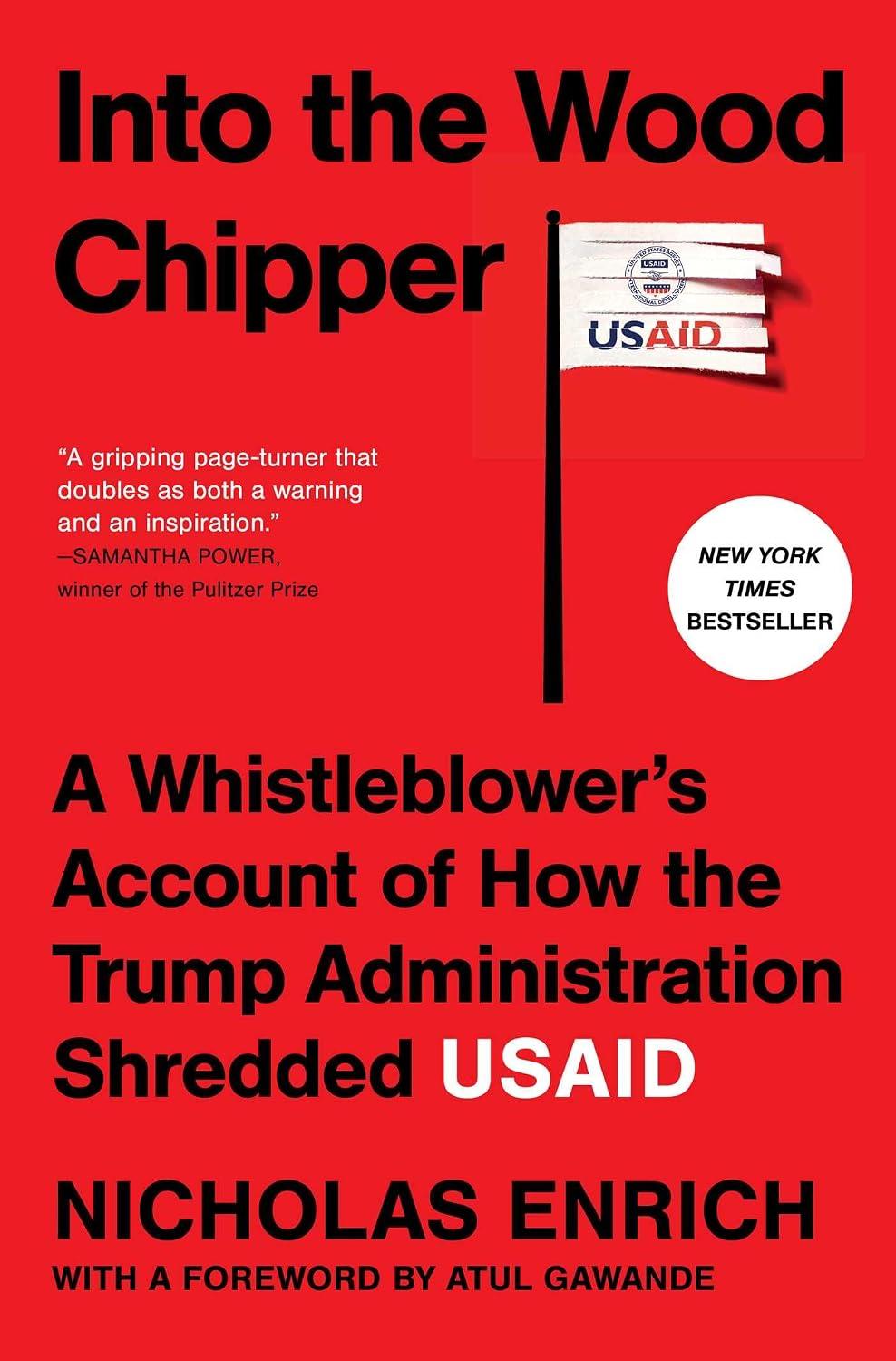
NEW YORK TIMES BESTSELLER “Propulsive…When the full history of this moment is ready to be written, Into the Wood Chipper will be a vivid source.” — The New York Times “A gripping page-turner that doubles as both a warning and an inspiration.” —Samantha Power, Pulitzer Prize–winning author of A Problem from Hell A civil servant discovers his breaking point when the Trump administration’s cruelty and indifference threaten to violate the oath he swore to uphold. Nicholas Enrich had finally achieved his lifelong dream: becoming USAID’s lead official for global health.
NEW YORK TIMES BESTSELLER “Propulsive…When the full history of this moment is ready to be written, Into the Wood Chipper will be a vivid source.” — The New York Times “A gripping page-turner that doubles as both a warning and an inspiration.” —Samantha Power, Pulitzer Prize–winning author of A Problem from Hell A civil servant discovers his breaking point when the Trump administration’s cruelty and indifference threaten to violate the oath he swore to uphold. Nicholas Enrich had finally achieved his lifelong dream: becoming USAID’s lead official for global health. But that dream turned out to be a nightmare in the tumultuous time after President Trump’s second inauguration. In the months that followed, USAID became the first target of Elon Musk’s newly created Department of Government Efficiency (DOGE). The mission to which Enrich had dedicated his career was being dismantled before his eyes—even the name of the agency was removed from the building’s facade. Enrich witnessed firsthand the Trump administration’s lies, how it systematically prevented USAID from providing lifesaving foreign aid, and the death and suffering around the world that resulted from careless decisions. Finally determining he could no longer keep quiet, and risking the career that he loved deeply, Enrich released a set of whistleblowing memos exposing the administration’s illegal and destructive actions. Enrich was put on administrative leave, yet his memos went viral and had a sustained impact. In the days following their release, hundreds of canceled aid projects were revived, and the documents were cited in a Supreme Court case on the legality of USAID’s dissolution. While his memos were too late to save USAID, Enrich was one of the first government officials to publicly blow the whistle on DOGE’s reckless destruction, sounding an early alarm bell for other federal agencies that would soon find themselves in the crosshairs. Urgent and profoundly human, Enrich’s story offers an astonishing behind-the-scenes look at a federal agency under siege, from the early days when Enrich and his team were unaware of what was to come to the shockingly ignorant, callous, and bigoted conversations they witnessed. Enrich reveals in this detailed, no-holds-barred account what was truly at stake when DOGE set out to dismantle one of America’s most effective humanitarian institutions, and how millions of lives hung in the balance.
Find this book on:
The Infinity Machine: Demis Hassabis, DeepMind, and the Quest for Superintelligence
Author:
Sebastian Mallaby
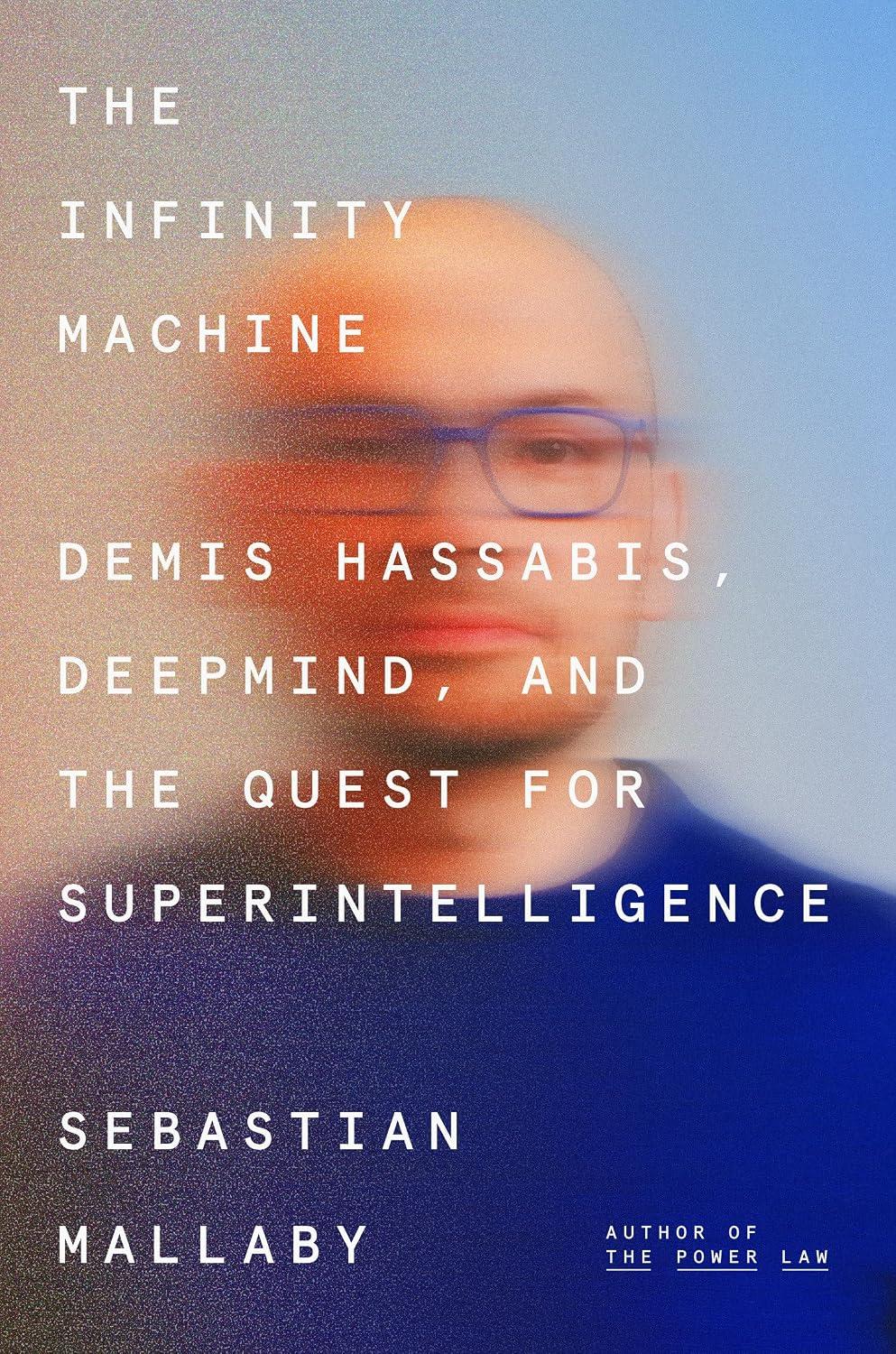
An Instant New York Times Bestseller • One of NPR's Best Books of the Year • Nominated for the Financial Times Business Book of the Year From one of our leading chroniclers of the intersection of innovation and capitalism, a landmark reckoning—based on unprecedented access—with one of the world’s most brilliant and driven tech visionaries, and his game-changing company Even by the standard of a tech industry stacked with so-called geniuses, Demis Hassabis is a special case. Born poor in North London to immigrant parents, a chess prodigy by age five and wizard coder in his teens, he turned down a seven figure offer before turning 18 to feed his insatiable scientific curiosity at Cambridge.
An Instant New York Times Bestseller • One of NPR's Best Books of the Year • Nominated for the Financial Times Business Book of the Year From one of our leading chroniclers of the intersection of innovation and capitalism, a landmark reckoning—based on unprecedented access—with one of the world’s most brilliant and driven tech visionaries, and his game-changing company Even by the standard of a tech industry stacked with so-called geniuses, Demis Hassabis is a special case. Born poor in North London to immigrant parents, a chess prodigy by age five and wizard coder in his teens, he turned down a seven figure offer before turning 18 to feed his insatiable scientific curiosity at Cambridge. Later, he added a neuroscience PhD to his computer science skills to pursue the dream of artificial general intelligence, the ultimate goal being to unravel the mysteries of biology and theoretical physics and to usher in super-abundance. Alongside a small group of fellow travelers, that is the path he is still on, leading the AI research at Google, winning a Nobel Prize along the way, and imagining machines that will compound, or possibly supplant, the human understanding of the universe. Hassabis has given Sebastian Mallaby a great deal of his time, sitting for over thirty hours of conversation. But Mallaby has also drawn from Hassabis's detractors, such as his estranged cofounder Mustafa Suleyman; from his rivals, such as OpenAI's leading scientist Ilya Sutskever; and from academic pioneers who now fear for human survival, such as Nobel laureate Geoffrey Hinton. The result is a revelatory account of a singular figure and his company and a profound reckoning with this protean field as it leaps from the periphery to the center of our consciousness. No one questions Hassabis’s brilliance. There are those who, like Elon Musk, have at times regarded him as an "evil genius." He is in a game where the stakes are matched only by the exorbitant costs — for talent, and for compute. Celebrated scientists pursue the technology because they cannot resist the sweetness of discovery. Others pursue it for money or power. The inventors believe they control their technology, but often, the technology controls them. Despite Hassabis’s pivotal role inside Google’s engine room, this is not a Silicon Valley story. Hassabis deals with the Valley and takes its money, but remains outside and furiously critical of it, lambasting its leaders in conversation with Mallaby. The end of this race cannot be known, but as this great book shows us, Hassabis's quest to will a new form of cognition into the world is a defining story for our era.
Find this book on:
Episode overview
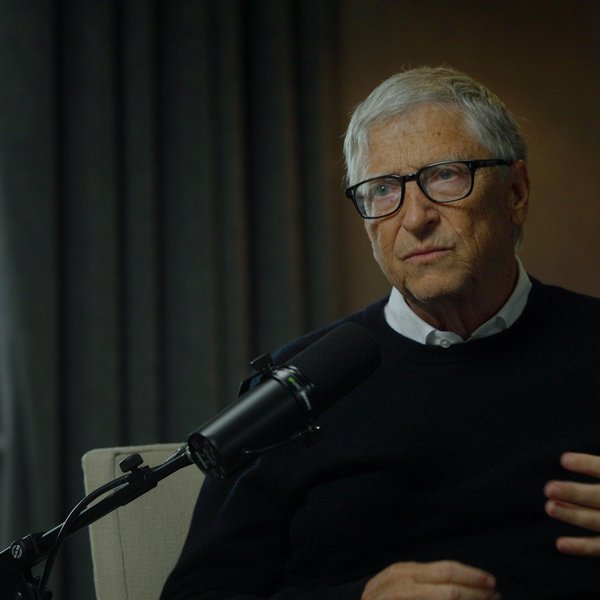
Bill Gates thinks A.I. alarmism hasn’t gone far enough. He believes the years ahead will be marred by catastrophic cyberattacks, bio-terrorism and mass job loss unless the government acts, because he thinks the idea that the A.I. industry can just self-regulate is “insane.”
I was struck in the conversation by how genuinely afraid Gates seemed to be that we are not ready for the consequences of what we are building, and how emphatic he was that so many of the people in positions of authority are in complete denial about what he thinks is about to happen.
Gates is a pioneering technologist, the co-founder of Microsoft and the chair of Gates Foundation, which is set to spend down around $200 billion over the next two decades. He recently announced that trying to make A.I. a force for equality in the world, as opposed to an impetus for inequality, is a new priority of his foundation’s work.