
From this episode
Recommended books
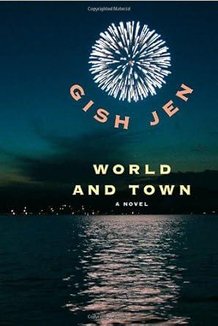
World and Town
Author:
Gish Jen
From the much-loved author of Who’s Irish? and The Love Wife, a world-sized novel set in a small New England town.
From the much-loved author of Who’s Irish? and The Love Wife, a world-sized novel set in a small New England town. Hattie Kong—the spirited offspring of a descendant of Confucius and an American missionary to China—has, in her fiftieth year of living in the United States, lost both her husband and her best friend to cancer. It is an utterly devastating loss, of course, and also heartbreakingly absurd: a little, she thinks, “like having twins. She got to book the same church with the same pianist for both funerals and did think she should have gotten some sort of twofer from the crematorium.” But now, two years later, it is time for Hattie to start over. She moves to the town of Riverlake, where she is soon joined by an immigrant Cambodian family on the run from their inner-city troubles, as well as—quite unexpectedly—by a just-retired neuroscientist ex-lover named Carter Hatch. All of them are, like Hattie, looking for a new start in a town that might once have represented the rock-solid base of American life but that is itself challenged, in 2001, by cell-phone towers and chain stores, struggling family farms and fundamentalist Christians. What Hattie makes of this situation is at the center of a novel that asks deep and absorbing questions about religion, home, America, what neighbors are, what love is, and, in the largest sense, what “worlds” we make of the world. Moving, humorous, compassionate, and expansive, World and Town is as rich in character as it is brilliantly evocative of its time and place. This is a truly masterful novel—enthralling, essential, and satisfying.
Find this book on:


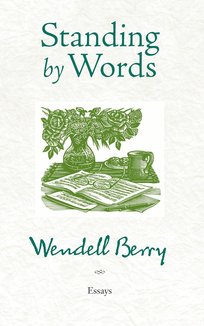
Standing by Words: Essays
Author:
Wendell Berry
An urgent, visionary, and heartfelt collection of essays focused on recovering deeper, time-honored values against the ravages of modern society. .
An urgent, visionary, and heartfelt collection of essays focused on recovering deeper, time-honored values against the ravages of modern society. . In six elegant, linked literary essays, Berry considers the degeneration of language that is manifest throughout our culture, from poetry to politics, from conversation to advertising, and he shows how the ever-widening cleft between the words and their referents mirrors the increasing isolation of individuals and their communities from the land. “This skillfully conceived book is one of the strongest contemporary arguments for literary tradition: a challenging credo, un-glib, calmly assured, clearly illuminating―and required reading for those seriously interested in the interplay between literature, ethics, and morality.” ― Kirkus Reviews “[Berry’s] poems, novels and essays . . . are probably the most sustained contemporary articulation of America’s agrarian, Jeffersonian ideal.” ― Publishers Weekly
Find this book on:
Love's Mind: An Essay on Contemplative Life
Author:
John S. Dunne
Do we love with a love we know, or with a love we do not know? This question, posed to Dunne in a dream, prompts him to describe the journey one takes in contemplating and coming to know love.
Do we love with a love we know, or with a love we do not know? This question, posed to Dunne in a dream, prompts him to describe the journey one takes in contemplating and coming to know love. His insights lead him to a vision of the city of God, in which contemplation replaces violence.
Find this book on:
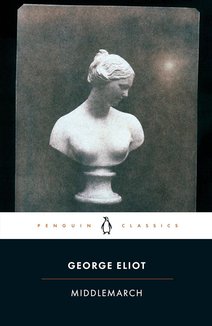
Middlemarch (Penguin Classics)
Authors:
George Eliot,
Rosemary Ashton
George Eliot's Victorian masterpiece: a magnificent portrait of a provincial town and its inhabitants George Eliot’s novel, Middlemarch: A Study of Provincial Life , explores a fictional nineteenth-century Midlands town in the midst of modern changes. The proposed Reform Bill promises political change; the building of railroads alters both the physical and cultural landscape; new scientific approaches to medicine incite public division; and scandal lurks behind respectability.
George Eliot's Victorian masterpiece: a magnificent portrait of a provincial town and its inhabitants George Eliot’s novel, Middlemarch: A Study of Provincial Life , explores a fictional nineteenth-century Midlands town in the midst of modern changes. The proposed Reform Bill promises political change; the building of railroads alters both the physical and cultural landscape; new scientific approaches to medicine incite public division; and scandal lurks behind respectability. The quiet drama of ordinary lives and flawed choices are played out in the complexly portrayed central characters of the novel—the idealistic Dorothea Brooke; the ambitious Dr. Lydgate; the spendthrift Fred Vincy; and the steadfast Mary Garth. The appearance of two outsiders further disrupts the town’s equilibrium—Will Ladislaw, the spirited nephew of Dorothea’s husband, the Rev. Edward Casaubon, and the sinister John Raffles, who threatens to expose the hidden past of one of the town’s elite. Middlemarch displays George Eliot’s clear-eyed yet humane understanding of characters caught up in the mysterious unfolding of self-knowledge. This Penguin Classics edition uses the second edition of 1874 and features an introduction and notes by Eliot-biographer Rosemary Ashton. In her introduction, Ashton discusses themes of social change in Middlemarch , and examines the novel as an imaginative embodiment of Eliot's humanist beliefs. For more than sixty-five years, Penguin has been the leading publisher of classic literature in the English-speaking world. With more than 1,500 titles, Penguin Classics represents a global bookshelf of the best works throughout history and across genres and disciplines. Readers trust the series to provide authoritative texts enhanced by introductions and notes by distinguished scholars and contemporary authors, as well as up-to-date translations by award-winning translators.
Find this book on:
Episode overview
Every day, we consume a mind-boggling amount of information. We scan online news articles, sift through text messages and emails, scroll through our social-media feeds — and that’s usually before we even get out of bed in the morning. In 2009, a team of researchers found that the average American consumed about 34 gigabytes of information a day. Undoubtedly, that number would be even higher today.
But what are we actually getting from this huge influx of information? How is it affecting our memories, our attention spans, our ability to think? What might this mean for today’s children, and future generations? And what does it take to read — and think — deeply in a world so flooded with constant input?
Maryanne Wolf is a researcher and scholar at U.C.L.A.’s School of Education and Information Studies. Her books “Proust and the Squid: The Story and Science of the Reading Brain” and “Reader, Come Home: The Reading Brain in a Digital World” explore the relationship between the process of reading and the neuroscience of the brain. And, in Wolfe’s view, our era of information overload represents a historical inflection point where our ability to read — truly, deeply read, not just scan or scroll — hangs in the balance.
We discuss why reading is a fundamentally “unnatural” act, how scanning and scrolling differ from “deep reading,” why it’s not accurate to say that “reading” is just one thing, how our brains process information differently when we’re reading on a Kindle or a laptop as opposed to a physical book, how exposure to such an abundance of information is rewiring our brains and reshaping our society, how to rediscover the lost art of reading books deeply, what Wolf recommends to those of us who struggle against digital distractions, what parents can do to to protect their children’s attention, how Wolf’s theory of a “biliterate brain” may save our species’ ability to deeply process language and information and more.