
From this episode
Recommended books
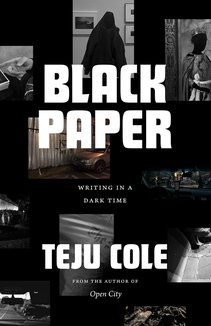
Black Paper: Writing in a Dark Time (Berlin Family Lectures)
Author:
Teju Cole
A profound book of essays from a celebrated master of the form. “Darkness is not empty,” writes Teju Cole in Black Paper , a book that meditates on what it means to sustain our humanity—and witness the humanity of others—in a time of darkness.
A profound book of essays from a celebrated master of the form. “Darkness is not empty,” writes Teju Cole in Black Paper , a book that meditates on what it means to sustain our humanity—and witness the humanity of others—in a time of darkness. One of the most celebrated essayists of his generation, Cole here plays variations on the essay form, modeling ways to attend to experience—not just to take in but to think critically about what we sense and what we don’t. Wide-ranging but thematically unified, the essays address ethical questions about what it means to be human and what it means to bear witness, recognizing how our individual present is informed by a collective past. Cole’s writings in Black Paper approach the fractured moment of our history through a constellation of interrelated concerns: confrontation with unsettling art, elegies both public and private, the defense of writing in a time of political upheaval, the role of the color black in the visual arts, the use of shadow in photography, and the links between literature and activism. Throughout, Cole gives us intriguing new ways of thinking about blackness and its numerous connotations. As he describes the carbon-copy process in his epilogue: “Writing on the top white sheet would transfer the carbon from the black paper onto the bottom white sheet. Black transported the meaning.”
Find this book on:


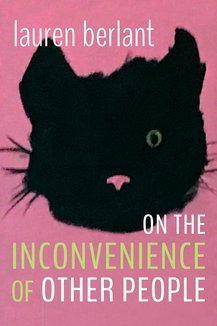
On the Inconvenience of Other People (Writing Matters!)
Author:
Lauren Berlant
In On the Inconvenience of Other People Lauren Berlant continues to explore our affective engagement with the world. Berlant focuses on the encounter with and the desire for the bother of other people and objects, showing that to be driven toward attachment is to desire to be inconvenienced.
In On the Inconvenience of Other People Lauren Berlant continues to explore our affective engagement with the world. Berlant focuses on the encounter with and the desire for the bother of other people and objects, showing that to be driven toward attachment is to desire to be inconvenienced. Drawing on a range of sources, including Last Tango in Paris , Ralph Waldo Emerson, Claudia Rankine, Christopher Isherwood, Bhanu Kapil, the Occupy movement, and resistance to anti-Black state violence, Berlant poses inconvenience as an affective relation and considers how we might loosen our attachments in ways that allow us to build new forms of life. Collecting strategies for breaking apart a world in need of disturbing, the book’s experiments in thought and writing cement Berlant’s status as one of the most inventive and influential thinkers of our time.
Find this book on:
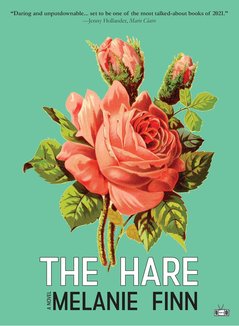
The Hare
Author:
Melanie Finn
* 2021 Vermont Book Award, Winner. * 2021 New England Book Awards, Finalist.
* 2021 Vermont Book Award, Winner. * 2021 New England Book Awards, Finalist. * A3C Reads: March 2023 Book of the Month. "A Most Anticipated Book of 2021" — Elle, Bustle, BuzzFeed, Vulture The Hare is an affecting portrait of Rosie Monroe, of her resilience and personal transformation under the pin of the male gaze. Raised to be obedient by a stern grandmother in a blue-collar town in Massachusetts, Rosie accepts a scholarship to art school in New York City in the 1980s. One morning at a museum, she meets a worldly man twenty years her senior, with access to the upper crust of New England society. Bennett is dashing, knows that “polo” refers only to ponies, teaches her which direction to spoon soup, and tells of exotic escapades with Truman Capote and Hunter S. Thompson. Soon, Rosie is living with him on a swanky estate on Connecticut’s Gold Coast, naively in sway to his moral ambivalence. A daughter—Miranda—is born, just as his current con goes awry forcing them to abscond in the middle of the night to the untamed wilderness of northern Vermont. Almost immediately, Bennett abandons them in an uninsulated cabin without a car or cash for weeks at a time, so he can tend a teaching job that may or may not exist at an elite college. Rosie is forced to care for her young daughter alone, and to tackle the stubborn intricacies of the wood stove, snowshoe into town, hunt for wild game, and forage in the forest. As Rosie and Miranda’s life gradually begins to normalize, Bennett’s schemes turn malevolent, and Rosie must at last confront his twisted deceptions. Her actions have far-reaching and perilous consequences. An astounding new literary thriller from a celebrated author at the height of her storytelling prowess, The Hare bravely considers a woman’s inherent sense of obligation—sexual and emotional—to the male hierarchy, and deserves to be part of our conversation as we reckon with #MeToo and the Brett Kavanaugh Supreme Court confirmation hearing. Rosie Monroe emerges as an authentic, tarnished feminist heroine.
Find this book on:
Episode overview
It’s impossible to deny that the U.S. has a serious loneliness problem. One 2018 report by the Kaiser Family Foundation found that 22 percent of all adults — almost 60 million Americans — said they often or always felt lonely or socially isolated. That was a full two years before the Covid pandemic. And Americans appear to be getting lonelier over time: From 1990 to 2021, there was a 25 percentage point decrease in the number of Americans who reported having five or more close friends. Young people now report feeling lonelier than the elderly.
This widespread loneliness is often analogized to a disease, an epidemic. But that label obscures something important: Loneliness in America isn’t merely the result of inevitable or abstract forces, like technological progress; it’s the product of social structures we’ve chosen — wittingly or unwittingly — to build for ourselves.
Sheila Liming is an associate professor of communications and creative media at Champlain College and the author of the new book “Hanging Out: The Radical Power of Killing Time.” In the book, Liming investigates what she calls the “quiet catastrophe” brewing in our social lives: the devastating fact that we’ve grown much less likely to simply spend time together outside our partnerships, workplaces and family units. What would it look like to reconfigure our world to make social connection easier for all of us?
We discuss how the structures of our lives and physical spaces have made atomization rather than community our society’s default setting, the surprising class differences in how far we live from our families, the social costs of wearing headphones and earbuds in public, how technology has enabled us to avoid the social awkwardness and rejection inherent in building community, the fact that the nuclear family is a historical aberration — and maybe a mistake, how texting and “ghosting” affect the resilience of our core relationships, why shows like “The Office” and “Parks and Recreation” are entirely built around socializing at the office and what we are losing in an era of increased remote work, why some parents are revolting against their kids having sleepovers and more.