From this episode
Recommended books
Intelligence and Spirit
Author:
Reza Negarestani
A critique of both classical humanism and dominant trends in posthumanism that formulates the ultimate form of intelligence as a theoretical and practical thought unfettered by the temporal order of things. In Intelligence and Spirit Reza Negarestani formulates the ultimate form of intelligence as a theoretical and practical thought unfettered by the temporal order of things, a real movement capable of overcoming any state of affairs that, from the perspective of the present, may appear to be the complete totality of history.
A critique of both classical humanism and dominant trends in posthumanism that formulates the ultimate form of intelligence as a theoretical and practical thought unfettered by the temporal order of things. In Intelligence and Spirit Reza Negarestani formulates the ultimate form of intelligence as a theoretical and practical thought unfettered by the temporal order of things, a real movement capable of overcoming any state of affairs that, from the perspective of the present, may appear to be the complete totality of history. Intelligence pierces through what seems to be the totality or the inevitable outcome of its history, be it the manifest portrait of the human or technocapitalism as the alleged pilot of history. Building on Hegel's account of Geist as a multiagent conception of mind and on Kant's transcendental psychology as a functional analysis of the conditions of possibility of mind, Negarestani provides a critique of both classical humanism and dominant trends in posthumanism. The assumptions of the former are exposed by way of a critique of the transcendental structure of experience as a tissue of subjective or psychological dogmas; the claims of the latter regarding the ubiquity of mind or the inevitable advent of an unconstrained superintelligence are challenged as no more than ideological fixations which do not stand the test of systematic scrutiny. This remarkable fusion of continental philosophy in the form of a renewal of the speculative ambitions of German Idealism and analytic philosophy in the form of extended thought-experiments and a philosophy of artificial languages opens up new perspectives on the meaning of human intelligence and explores the real potential of posthuman intelligence and what it means for us to live in its prehistory.
Find this book on:


Children of Time (Children of Time, 1)
Author:
Adrian Tchaikovsky
Adrian Tchaikovksy's Arthur C. Clarke Award-winning novel Children of Time is the epic story of humanity's battle for survival on a terraformed planet.
Adrian Tchaikovksy's Arthur C. Clarke Award-winning novel Children of Time is the epic story of humanity's battle for survival on a terraformed planet. Who will inherit this new Earth? The last remnants of the human race left a dying Earth, desperate to find a new home among the stars. Following in the footsteps of their ancestors, they discover the greatest treasure of the past age -- a world terraformed and prepared for human life. But all is not right in this new Eden. In the long years since the planet was abandoned, the work of its architects has borne disastrous fruit. The planet is not waiting for them, pristine and unoccupied. New masters have turned it from a refuge into mankind's worst nightmare. Now two civilizations are on a collision course, both testing the boundaries of what they will do to survive. As the fate of humanity hangs in the balance, who are the true heirs of this new Earth?
Find this book on:
⿻ 數位 Plurality: The Future of Collaborative Technology and Democracy
Authors:
E. Glen Weyl,
Audrey Tang,
⿻ Community
In the vast, boundless expanse of Plurality, each life is a unique and precious existence...Regardless of how perilous external circumstances may be...(l)et us take positive action to allow the seeds of shared goodness to break through the earth and blossom into flower of empathy, joy and harmony. — His Holiness the Dalai Lama XIV of Tibet In a technologically advanced, politically challenging, and rapidly evolving 21st century, what does a free and open future look like?
In the vast, boundless expanse of Plurality, each life is a unique and precious existence...Regardless of how perilous external circumstances may be...(l)et us take positive action to allow the seeds of shared goodness to break through the earth and blossom into flower of empathy, joy and harmony. — His Holiness the Dalai Lama XIV of Tibet In a technologically advanced, politically challenging, and rapidly evolving 21st century, what does a free and open future look like? Glen, Audrey and their coauthors offer a compelling view of a way forward. — Vitalik Buterin, Founder of Ethereum Democracy has been a confrontation between opposing values. In Taiwan, however, it has become a conversation among a diversity of values. Audrey Tang has shown us how to create a "digital democracy" that transcends the constraints of ideology - that is the major contribution of this book. — Tsai Ing-wen, President of the ROC (Taiwan) They offer us a portal into a future where technology supports democracy, pluralism, and broad human flourishing. We know this future is possible because Tang has been building it in Taiwan. The conceptual foundations laid here usher in a much-needed paradigm change for modern life. — Danielle S. Allen, political philosopher, James Bryant Conant University Professor at Harvard, MacArthur Fellow, and author of Our Declaration and Cuz Plurality reads like optimistic sci-fi, already happening in real life! Can democracies around the world follow in Taiwan’s footsteps to upgrade free society for the digital age? Fingers crossed for a happy ending. — Joseph Gordon-Levitt, Emmy-winning artist and founder of HITRECORD Digital technology threatens to tear free and open societies apart through polarization, inequality, and loneliness. But in the decade since the weekslong occupation of their parliament, a diverse island of resilience has shown another way is possible. Taiwan achieved inclusive, technology-fueled growth, overcame the pandemic without lockdowns and the infodemic without takedowns, entrusted its people to tackle shared challenges like environmental protection while capitalizing on a culture of innovation to “hack the government.” Here, the architects of Taiwan’s internationally acclaimed digital democracy share the secret of their success. Plurality (symbolized ⿻) harnesses digital tools not to replace humans or trust, but to channel the potential energy in social diversity that can erupt in conflict instead for progress, growth and beauty. From intimate digitally empowered telepathy to global trade running on social networks rather than money, ⿻ offers tools to radically enrich relationships while leaving no one behind. ⿻ thus promises to transform every sector from healthcare to media, as illustrated by the way it has been written: as a chorus of open, self-governing collaboration of voices from around the globe. Their work in public on this openly available text shows — as well as tells — how everyone from a devout African farmer to a Hollywood celebrity can help build a more dynamic, harmonious and inclusive world. E. Glen Weyl is Founder of RadicalxChange, Microsoft Research's Plural Technology Collaboratory, & Plurality Institute & co-author of Radical Markets . Audrey Tang is the inaugural Minister of Digital Affairs in Taiwan & the inaugural ⚧️ minister in the 🌐. A global ⿻ community of dozens collaborated to create this first-ever open-source self-governed book harnessing tools described within. You are invited to join us at https://www.plurality.net
Find this book on:
Episode overview
A.I.-generated art has flooded the internet, and a lot of it is derivative, even boring or offensive. But what could it look like for artists to collaborate with A.I. systems in making art that is actually generative, challenging, transcendent?
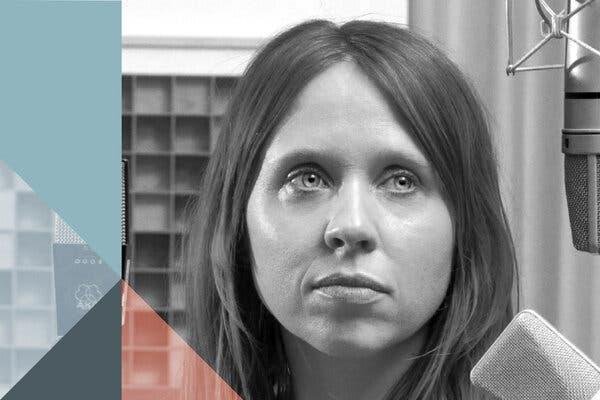
Holly Herndon offered one answer with her 2019 album “PROTO.” Along with Mathew Dryhurst and the programmer Jules LaPlace, she built an A.I. called “Spawn” trained on human voices that adds an uncanny yet oddly personal layer to the music. Beyond her music and visual art, Herndon is trying to solve a problem that many creative people are encountering as A.I. becomes more prominent: How do you encourage experimentation without stealing others’ work to train A.I. models? Along with Dryhurst, Jordan Meyer and Patrick Hoepner, she co-founded Spawning, a company figuring out how to allow artists — and all of us creating content on the internet — to “consent” to our work being used as training data.
In this conversation, we discuss how Herndon collaborated with a human chorus and her “A.I. baby,” Spawn, on “PROTO”; how A.I. voice imitators grew out of electronic music and other musical genres; why Herndon prefers the term “collective intelligence” to “artificial intelligence”; why an “opt-in” model could help us retain more control of our work as A.I. trawls the internet for data; and much more.