From this episode
Recommended books
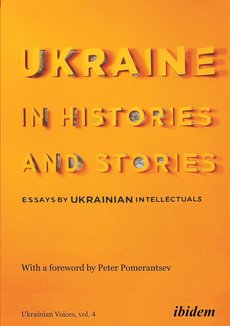
Ukraine in Histories and Stories: Essays by Ukrainian Intellectuals (Ukrainian Voices)
Authors:
Volodymyr Yermolenko,
Peter Pomerantsev
This fascinating collection of texts by contemporary Ukrainian writers, historians, philosophers, political analysts, and opinion leaders combines reflections on Ukraine’s history―or histories―and analyses of the present as well as conceptual ideas and life stories. The authors present a multi-faceted image of Ukrainian memory and reality: from the Holodomor to Maidan, from Russian aggression to cultural diversity, from the depth of the past to the complexity of the present.
This fascinating collection of texts by contemporary Ukrainian writers, historians, philosophers, political analysts, and opinion leaders combines reflections on Ukraine’s history―or histories―and analyses of the present as well as conceptual ideas and life stories. The authors present a multi-faceted image of Ukrainian memory and reality: from the Holodomor to Maidan, from Russian aggression to cultural diversity, from the depth of the past to the complexity of the present. Essential reading for anyone interested in Ukraine. The contributors of this book are prominent Ukrainian historians, writers, philosophers, political analysts, and intellectuals.
Find this book on:


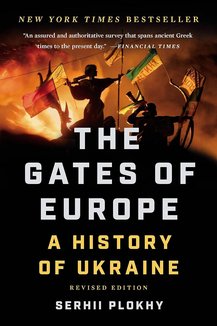
Gates of Europe
Author:
Serhii Plokhy
A New York Times bestseller, this definitive history of Ukraine is “an exemplary account of Europe’s least-known large country” ( Wall Street Journal). As Ukraine is embroiled in an ongoing struggle with Russia to preserve its territorial integrity and political independence, celebrated historian Serhii Plokhy explains that today’s crisis is a case of history repeating itself: the Ukrainian conflict is only the latest in a long history of turmoil over Ukraine’s sovereignty.
A New York Times bestseller, this definitive history of Ukraine is “an exemplary account of Europe’s least-known large country” ( Wall Street Journal). As Ukraine is embroiled in an ongoing struggle with Russia to preserve its territorial integrity and political independence, celebrated historian Serhii Plokhy explains that today’s crisis is a case of history repeating itself: the Ukrainian conflict is only the latest in a long history of turmoil over Ukraine’s sovereignty. Situated between Central Europe, Russia, and the Middle East, Ukraine has been shaped by empires that exploited the nation as a strategic gateway between East and West—from the Romans and Ottomans to the Third Reich and the Soviet Union. In The Gates of Europe , Plokhy examines Ukraine’s search for its identity through the lives of major Ukrainian historical figures, from its heroes to its conquerors. This revised edition includes new material that brings this definitive history up to the present. As Ukraine once again finds itself at the center of global attention, Plokhy brings its history to vivid life as he connects the nation’s past with its present and future.
Find this book on:
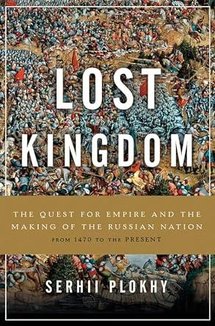
Lost Kingdom: The Quest for Empire and the Making of the Russian Nation
Author:
Serhii Plokhy
From a preeminent scholar of Eastern Europe and the prizewinning author of Chernobyl , the essential history of Russian imperialism. In 2014, Russia annexed the Crimea and attempted to seize a portion of Ukraine -- only the latest iteration of a centuries-long effort to expand Russian boundaries and create a pan-Russian nation.
From a preeminent scholar of Eastern Europe and the prizewinning author of Chernobyl , the essential history of Russian imperialism. In 2014, Russia annexed the Crimea and attempted to seize a portion of Ukraine -- only the latest iteration of a centuries-long effort to expand Russian boundaries and create a pan-Russian nation. In Lost Kingdom , award-winning historian Serhii Plokhy argues that we can only understand the confluence of Russian imperialism and nationalism today by delving into the nation's history. Spanning over 500 years, from the end of the Mongol rule to the present day, Plokhy shows how leaders from Ivan the Terrible to Joseph Stalin to Vladimir Putin exploited existing forms of identity, warfare, and territorial expansion to achieve imperial supremacy. An authoritative and masterful account of Russian nationalism, Lost Kingdom chronicles the story behind Russia's belligerent empire-building quest.
Find this book on:
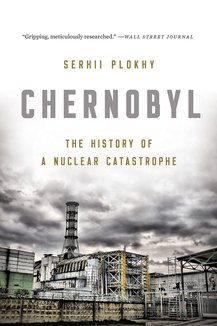
Chernobyl: The History of a Nuclear Catastrophe
Author:
Serhii Plokhy
A Chernobyl survivor and the New York Times bestselling author of The Gates of Europe "mercilessly chronicles the absurdities of the Soviet system" in this "vividly empathetic" account of the worst nuclear accident in history ( Wall Street Journal ). On the morning of April 26, 1986, Europe witnessed the worst nuclear disaster in history: the explosion of a reactor at the Chernobyl Nuclear Power Plant in Soviet Ukraine.
A Chernobyl survivor and the New York Times bestselling author of The Gates of Europe "mercilessly chronicles the absurdities of the Soviet system" in this "vividly empathetic" account of the worst nuclear accident in history ( Wall Street Journal ). On the morning of April 26, 1986, Europe witnessed the worst nuclear disaster in history: the explosion of a reactor at the Chernobyl Nuclear Power Plant in Soviet Ukraine. Dozens died of radiation poisoning, fallout contaminated half the continent, and thousands fell ill. In Chernobyl , Serhii Plokhy draws on new sources to tell the dramatic stories of the firefighters, scientists, and soldiers who heroically extinguished the nuclear inferno. He lays bare the flaws of the Soviet nuclear industry, tracing the disaster to the authoritarian character of the Communist party rule, the regime's control over scientific information, and its emphasis on economic development over all else. Today, the risk of another Chernobyl looms in the mismanagement of nuclear power in the developing world. A moving and definitive account, Chernobyl is also an urgent call to action.
Find this book on:
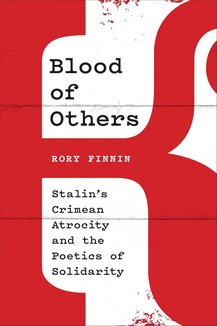
Blood of Others: Stalin's Crimean Atrocity and the Poetics of Solidarity
Author:
Rory Finnin
In the spring of 1944, Stalin deported the Crimean Tatars, a small Sunni Muslim nation, from their ancestral homeland on the Black Sea peninsula. The gravity of this event, which ultimately claimed the lives of tens of thousands of victims, was shrouded in secrecy after the Second World War.
In the spring of 1944, Stalin deported the Crimean Tatars, a small Sunni Muslim nation, from their ancestral homeland on the Black Sea peninsula. The gravity of this event, which ultimately claimed the lives of tens of thousands of victims, was shrouded in secrecy after the Second World War. What broke the silence in Soviet Russia, Soviet Ukraine, and the Republic of Turkey were works of literature. These texts of poetry and prose – some passed hand-to-hand underground, others published to controversy – shocked the conscience of readers and sought to move them to action. Blood of Others presents these works as vivid evidence of literature’s power to lift our moral horizons. In bringing these remarkable texts to light and contextualizing them among Russian, Turkish, and Ukrainian representations of Crimea from 1783, Rory Finnin provides an innovative cultural history of the Black Sea region. He reveals how a "poetics of solidarity" promoted empathy and support for an oppressed people through complex provocations of guilt rather than shame. Forging new roads between Slavic studies and Middle Eastern studies, Blood of Others is a compelling and timely exploration of the ideas and identities coursing between Russia, Turkey, and Ukraine – three countries determining the fate of a volatile and geopolitically pivotal part of our world.
Find this book on:
Episode overview
Russia’s invasion of Ukraine is only getting more brutal: We’ve seen the bodies of civilians strewn in the streets in Bucha, the city of Mariupol almost leveled and, just a few days ago, a Russian missile attack on a crowded train station in Kramatorsk killing at least 50 people. The United Nations has confirmed 1,793 civilian deaths in Ukraine, though the actual number is thought to be far higher.
Russia’s viciousness in this campaign makes Ukraine’s resilience all the more remarkable. Ukrainians have defied expectations in staving off Russia’s far larger army and holding cities like Kyiv that some believed might fall within days of an invasion. Much of the commentary in recent weeks has revolved around what this war has revealed about Russia: its myths, its military, its leadership, its threat. What’s no less important, though, is what this war has revealed about Ukraine.
Ukrainians have modeled a deep commitment to self-determination and shown how far they would go to protect it. The Ukrainian philosopher and editor Volodymyr Yermolenko has written that “freedom is the key trait of Ukraine’s identity as a political nation,” and Ukraine’s resistance testifies to how deep that trait runs.
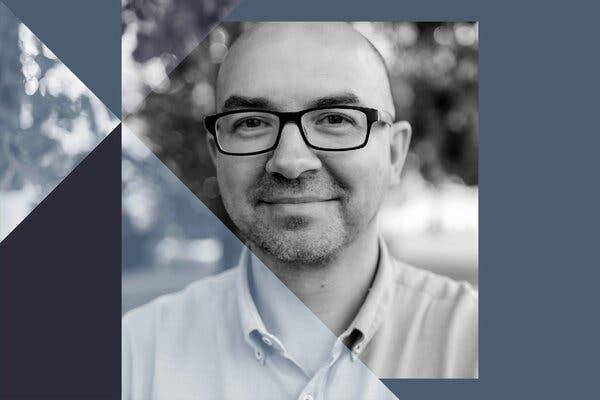
Yermolenko is a philosopher, the editor in chief of UkraineWorld and the editor of the essay collection “Ukraine in Histories and Stories.” I invited Yermolenko onto the show to help me understand how Ukraine has defined itself in relation to the political behemoths to its east and west: Russia and Europe. Our conversation also explores what it has felt like to be in Kyiv as Russian troops have shelled the city, how definitions of time and home change during war, what has — and hasn’t — surprised Yermolenko about the Ukrainian resistance, what people in the West may not understand about the cultural differences between Ukraine and Russia, why Ukraine’s political structure makes it so difficult to conquer, how Ukraine is reminding the West why its republican and humanistic values matter, what Yermolenko would say to President Biden if he could and more.