
From this episode
Recommended books
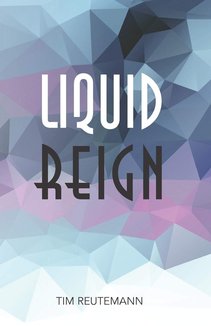
Liquid Reign
Authors:
Tim Reutemann,
Dr. Karl-Heinz Häsliprinz
Liquid Reign is a work of speculative fiction, imagineering a fairly liveable future in 2051, neither dys- nor utopian.Melting the boundaries between science and fiction into a novel format, each chapter provides links to the sources of inspiration influencing it – ranging from Jean Jacques Rousseau‘s social contract of 1762 to blockchain startups from 2018. Check www.liquid-reign.com"A vertiginous rollercoaster of ideas and a unique take on the future of (un)governance, delivered with irrepressible, unruly energy."– Jamie King of the Pirates, Host "Steal this Show""Tim Reutemann has become one of my favorite big brain boys over the past few months.
Liquid Reign is a work of speculative fiction, imagineering a fairly liveable future in 2051, neither dys- nor utopian.Melting the boundaries between science and fiction into a novel format, each chapter provides links to the sources of inspiration influencing it – ranging from Jean Jacques Rousseau‘s social contract of 1762 to blockchain startups from 2018. Check www.liquid-reign.com"A vertiginous rollercoaster of ideas and a unique take on the future of (un)governance, delivered with irrepressible, unruly energy."– Jamie King of the Pirates, Host "Steal this Show""Tim Reutemann has become one of my favorite big brain boys over the past few months. In his book Liquid Reign he explores the future of democracy and civics in a way I have never seen done before... "- TheBurgerkrieg, Edgy Youtuber"Liquid Reign is a SciFi Novel about technology and our future and AI an all sorts of awesome shit and how it's gonna affect our world"- Jarred "PiG" Krensel, Ex Pro-Starcraft Player and e-Sports commentator "Wooow, what a reading experience - truly immersive! A world with liquid democracy, artificial intelligence,universal basic income and a limit on wealth accumulation. After you‘ve read the book, you have a feeling of a possible future.“– Raphel Fasko, Mastermind of the Circular Economy
Find this book on:


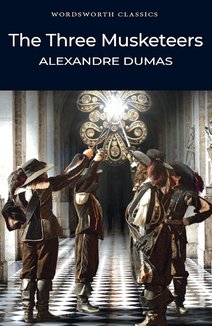
The Three Musketeers (Wordsworth Classics)
Author:
Alexandre Dumas père
The Three Musketeers by Alexandre Dumas. The Three Musketeers tells the story of the early adventures of the young Gascon gentleman, D'Artagnan and his three friends from the regiment of the King's Musketeers - Athos, Porthos and Aramis.
The Three Musketeers by Alexandre Dumas. The Three Musketeers tells the story of the early adventures of the young Gascon gentleman, D'Artagnan and his three friends from the regiment of the King's Musketeers - Athos, Porthos and Aramis. Under the watchful eye of their patron M. de Treville, the four defend the honour of the regiment against the guards of Cardinal Richelieu, and the honour of the queen against the machinations of the Cardinal himself as the power struggles of seventeenth century France are vividly played out in the background. But their most dangerous encounter is with the Cardinal's spy, Milady, one of literature's most memorable female villains, and Dumas employs all his fast-paced narrative skills to bring this enthralling novel to a breathtakingly gripping and dramatic conclusion
Find this book on:
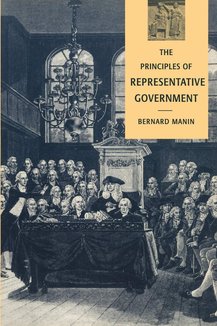
The Principles of Representative Government (Themes in the Social Sciences)
Author:
Bernard Manin
The thesis of this original and provocative book is that representative government should be understood as a combination of democratic and undemocratic elements. Challenging the conventionally held views on the subject, Professor Manin reminds us that while today representative institutions and democracy appear as virtually indistinguishable, when representative government was first established in Europe and America, it was designed in opposition to democracy proper.
The thesis of this original and provocative book is that representative government should be understood as a combination of democratic and undemocratic elements. Challenging the conventionally held views on the subject, Professor Manin reminds us that while today representative institutions and democracy appear as virtually indistinguishable, when representative government was first established in Europe and America, it was designed in opposition to democracy proper. The author identifies the essential features of democratic institutions and reviews the history of their application.
Find this book on:
Episode overview
One thing I want to do on this show is give space to truly radical ideas, to expand the boundaries of our political and moral imaginations. And Hélène Landemore, a political scientist at Yale, has one of those ideas. She calls it “open democracy,” and the premise is simple: What we call democracy is not very democratic.
The role of the people is confined to elections, to choosing the elites who will represent us. Landemore argues that our political thinking is stuck in “18th-century epistemologies and technologies.” It is not enough.
We’ve learned much in the last few hundred years about random sampling, about the benefits of cognitively diverse groups, about the ways elections are captured by those with the most social and financial capital. Landemore wants to take what we’ve learned and build a new vision of democracy atop it — one in which we let groups of randomly selected citizens actually deliberate and govern. One in which we trust deliberation and diversity, not elections and political parties, to shape our ideas and to restrain our worst impulses.
This is a challenging idea. I don’t know that it would work. But it’s a provocation worth wrestling with, particularly at this moment, when our ideas about democracy have so far outpaced the thin, corrupted ways in which we practice it.
You’ve heard people say, “We’re a republic, not a democracy.” Landemore’s challenge is this: What if we were a democracy? We honor those who came before us for radically reimagining who could govern, and how politics could work. But did they really discover the terminal state of democracy? Or are there bold steps left for us to take?