From this episode
Recommended books
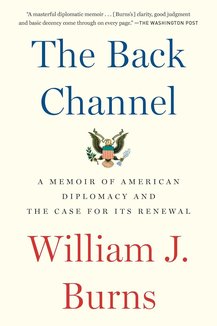
The Back Channel: A Memoir of American Diplomacy and the Case for Its Renewal
Author:
William J. Burns
“A masterful diplomatic memoir” ( The Washington Post ) from CIA director and career ambassador William J. Burns, from his service under five presidents to his personal encounters with Vladimir Putin and other world leaders—an impassioned argument for the enduring value of diplomacy in an increasingly volatile world.
“A masterful diplomatic memoir” ( The Washington Post ) from CIA director and career ambassador William J. Burns, from his service under five presidents to his personal encounters with Vladimir Putin and other world leaders—an impassioned argument for the enduring value of diplomacy in an increasingly volatile world. Over the course of more than three decades as an American diplomat, William J. Burns played a central role in the most consequential diplomatic episodes of his time—from the bloodless end of the Cold War to the collapse of post–Cold War relations with Putin’s Russia, from post–9/11 tumult in Afghanistan, Iraq, and the Middle East to the secret nuclear talks with Iran. In The Back Channel, Burns recounts, with novelistic detail and incisive analysis, some of the seminal moments of his career. Drawing on a trove of newly declassified cables and memos, he gives readers a rare inside look at American diplomacy in action. His dispatches from war-torn Chechnya and Qaddafi’s bizarre camp in the Libyan desert and his warnings of the “Perfect Storm” that would be unleashed by the Iraq War will reshape our understanding of history—and inform the policy debates of the future. Burns sketches the contours of effective American leadership in a world that resembles neither the zero-sum Cold War contest of his early years as a diplomat nor the “unipolar moment” of American primacy that followed. Ultimately, The Back Channel is an eloquent, deeply informed, and timely story of a life spent in service of American interests abroad. It is also a powerful reminder, in a time of great turmoil, of the enduring importance of diplomacy.
Find this book on:


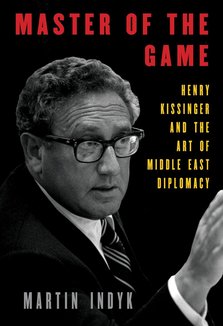
Master of the Game: Henry Kissinger and the Art of Middle East Diplomacy
Author:
Martin Indyk
A perceptive and provocative history of Henry Kissinger's diplomatic negotiations in the Middle East that illuminates the unique challenges and barriers Kissinger and his successors have faced in their attempts to broker peace between Israel and its Arab neighbors. “A wealth of lessons for today, not only about the challenges in that region but also about the art of diplomacy .
A perceptive and provocative history of Henry Kissinger's diplomatic negotiations in the Middle East that illuminates the unique challenges and barriers Kissinger and his successors have faced in their attempts to broker peace between Israel and its Arab neighbors. “A wealth of lessons for today, not only about the challenges in that region but also about the art of diplomacy . . . the drama, dazzling maneuvers, and grand strategic vision.”—Walter Isaacson, author of The Code Breaker More than twenty years have elapsed since the United States last brokered a peace agreement between the Israelis and Palestinians. In that time, three presidents have tried and failed. Martin Indyk—a former United States ambassador to Israel and special envoy for the Israeli-Palestinian negotiations in 2013—has experienced these political frustrations and disappointments firsthand. Now, in an attempt to understand the arc of American diplomatic influence in the Middle East, he returns to the origins of American-led peace efforts and to the man who created the Middle East peace process—Henry Kissinger. Based on newly available documents from American and Israeli archives, extensive interviews with Kissinger, and Indyk's own interactions with some of the main players, the author takes readers inside the negotiations. Here is a roster of larger-than-life characters—Anwar Sadat, Golda Meir, Moshe Dayan, Yitzhak Rabin, Hafez al-Assad, and Kissinger himself. Indyk's account is both that of a historian poring over the records of these events, as well as an inside player seeking to glean lessons for Middle East peacemaking. He makes clear that understanding Kissinger's design for Middle East peacemaking is key to comprehending how to—and how not to—make peace.
Find this book on:
Episode overview
Before Oct. 7, Israel appeared to many to be sliding into a “one-state reality,” where it had functional control over Gaza and the West Bank, but the Palestinians who lived there were denied full rights. In 2021, a group of hundreds of former senior defense and diplomatic officials in Israel published a report warning that this was a catastrophe — for Israel’s security, its democratic values, its international standing, and its very soul. And they argued that there was another way, that even without a Palestinian “partner for peace,” there was a huge amount Israel could do on its own to create the conditions for a two-state solution to emerge in the future.
Nimrod Novik is a fellow at the Israel Policy Forum and a member of the executive committee of Commanders for Israel’s Security, the group behind the report. He was a senior policy adviser to Shimon Peres when he was prime minister, and was involved in all forms of negotiations with Palestinians and the Arab world.
I wanted to talk to Novik about the plan proposed in the Commanders for Israel’s Security report, and how they might have changed in light of Oct. 7 and the war. We also talk through what the “day after” might look like in Gaza, the immense anger of the Israeli public over the intelligence failure that led up to the attacks, the alternative coalitions building against Prime Minister Benjamin Netanyahu, and much more.