
From this episode
Recommended books

The German War: A Nation Under Arms, 1939-1945
Author:
Nicholas Stargardt
A groundbreaking history of what drove the Germans to fight -- and keep fighting -- for a lost cause in World War II In The German War , acclaimed historian Nicholas Stargardt draws on an extraordinary range of firsthand testimony -- personal diaries, court records, and military correspondence -- to explore how the German people experienced the Second World War. When war broke out in September 1939, it was deeply unpopular in Germany.
A groundbreaking history of what drove the Germans to fight -- and keep fighting -- for a lost cause in World War II In The German War , acclaimed historian Nicholas Stargardt draws on an extraordinary range of firsthand testimony -- personal diaries, court records, and military correspondence -- to explore how the German people experienced the Second World War. When war broke out in September 1939, it was deeply unpopular in Germany. Yet without the active participation and commitment of the German people, it could not have continued for almost six years. What, then, was the war the Germans thought they were fighting? How did the changing course of the conflict -- the victories of the Blitzkrieg , the first defeats in the east, the bombing of German cities -- alter their views and expectations? And when did Germans first realize they were fighting a genocidal war? Told from the perspective of those who lived through it -- soldiers, schoolteachers, and housewives; Nazis, Christians, and Jews -- this masterful historical narrative sheds fresh and disturbing light on the beliefs and fears of a people who embarked on and fought to the end a brutal war of conquest and genocide.
Find this book on:


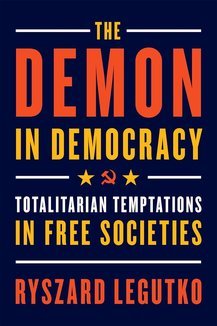
The Demon in Democracy: Totalitarian Temptations in Free Societies
Author:
Ryszard Legutko
Ryszard Legutko lived and suffered under communism for decades--and he fought with the Polish ant-communist movement to abolish it. Having lived for two decades under a liberal democracy, however, he has discovered that these two political systems have a lot more in common than one might think.
Ryszard Legutko lived and suffered under communism for decades--and he fought with the Polish ant-communist movement to abolish it. Having lived for two decades under a liberal democracy, however, he has discovered that these two political systems have a lot more in common than one might think. They both stem from the same historical roots in early modernity, and accept similar presuppositions about history, society, religion, politics, culture, and human nature. In The Demon in Democracy , Legutko explores the shared objectives between these two political systems, and explains how liberal democracy has over time lurched towards the same goals as communism, albeit without Soviet style brutalality. Both systems, says Legutko, reduce human nature to that of the common man, who is led to believe himself liberated from the obligations of the past. Both the communist man and the liberal democratic man refuse to admit that there exists anything of value outside the political systems to which they pledged their loyalty. And both systems refuse to undertake any critical examination of their ideological prejudices.
Find this book on:
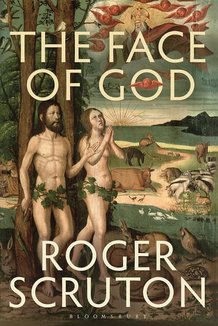
The Face of God: The Gifford Lectures
Author:
Roger Scruton
Roger Scruton explores the place of God in a disenchanted world. His argument is a response to the atheist culture that is now growing around us, and also a defence of human uniqueness.
Roger Scruton explores the place of God in a disenchanted world. His argument is a response to the atheist culture that is now growing around us, and also a defence of human uniqueness. He rebuts the claim that there is no meaning or purpose in the natural world, and argues that the sacred and the transcendental are 'real presences', through which human beings come to know themselves and to find both their freedom and their redemption. In the human face we find a paradigm of meaning. And from this experience, Scruton argues, we both construct the face of the world, and address the face of God. We find in the face both the proof of our freedom and the mark of self-consciousness. One of the motivations of the atheist culture is to escape from the eye of judgement. You escape from the eye of judgement by blotting out the face: and this, Scruton argues, is the most disturbing aspect of the times in which we live. In his wide-ranging argument Scruton explains the growing sense of destruction that we feel, as the habits of pleasure seeking and consumerism deface the world. His book defends a consecrated world against the habit of desecration, and offers a vision of the religious way of life in a time of trial.
Find this book on:
Episode overview
Republicans already hold tremendous power in America. They have appointed six of the nine current Supreme Court justices. They have more state trifectas (control of both legislative houses, as well as the governor’s seat) than Democrats. And come 2023, they will also control the House of Representatives.
But there’s a hollowness at the core of the modern G.O.P. It’s hard to identify any clear party leader, coherent policy agenda or concerted electoral strategy. The party didn’t bother putting forward a policy platform before the 2020 election or articulating an alternative policy vision in 2022. It has hardly reckoned with its under-performances in the 2018, 2020, and 2022 elections. At this point, it’s unclear whether there’s any real party structure — or substrate of ideas — left at all.
All of which raises the question: What exactly is the Republican Party at this point? What does it believe? What does it want to achieve? Whose lead does it follow? Those questions will need to be answered somehow over the next two years, as Republican politicians compete for their party’s nomination for the 2024 presidential election and Republican House members wield the power of their new majority.
Michael Brendan Dougherty is a senior writer at National Review and a nonresident fellow at the American Enterprise Institute. We disagree on plenty, but I find him to be one of the sharpest observers of the contemporary Republican Party. So I invited him on the show for an inside-the-tent conversation on the chaotic state of the current G.O.P. and the choices it will have to make over the next two years.
We discuss how the party is processing the 2022 midterms, why Dougherty thinks Donald Trump has a very good chance of winning the Republican nomination again in 2024, whether the G.O.P. leadership actually understands its own voters, how Ron DeSantis rose to become one of the party’s leading 2024 contenders, whether DeSantis — and the G.O.P. more broadly — actually have an economic agenda at this point, why Trump’s greatest strength in 2024 could be the economy he presided over in 2018 and 2019, why Dougherty doesn’t think Trump’s political appeal is transferable to anyone else in the Republican Party, what kind of House speaker Kevin McCarthy might be, which Republicans — other than Trump and DeSantis — to watch out for, and more.