
From this episode
Recommended books
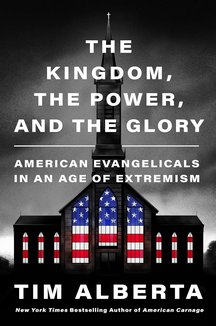
Instant New York Times Bestseller One of Barack Obama's Favorite Books of the Year An Economist and Air Mail Best Book of the Year "Brave and absorbing." -- New York Times “Alberta is not just a thorough and responsible reporter but a vibrant writer, capable of rendering a farcical scene in vivid hues.” -- Washington Post “An astonishingly clear-eyed look at a murky movement.” -- Los Angeles Times Evangelical Christians are perhaps the most polarizing—and least understood—people living in America today. In his seminal new book, The Kingdom, the Power, and the Glory , journalist Tim Alberta, himself a practicing Christian and the son of an evangelical pastor, paints an expansive and profoundly troubling portrait of the American evangelical movement.
Instant New York Times Bestseller One of Barack Obama's Favorite Books of the Year An Economist and Air Mail Best Book of the Year "Brave and absorbing." -- New York Times “Alberta is not just a thorough and responsible reporter but a vibrant writer, capable of rendering a farcical scene in vivid hues.” -- Washington Post “An astonishingly clear-eyed look at a murky movement.” -- Los Angeles Times Evangelical Christians are perhaps the most polarizing—and least understood—people living in America today. In his seminal new book, The Kingdom, the Power, and the Glory , journalist Tim Alberta, himself a practicing Christian and the son of an evangelical pastor, paints an expansive and profoundly troubling portrait of the American evangelical movement. Through the eyes of televangelists and small-town preachers, celebrity revivalists and everyday churchgoers, Alberta tells the story of a faith cheapened by ephemeral fear, a promise corrupted by partisan subterfuge, and a reputation stained by perpetual scandal. For millions of conservative Christians, America is their kingdom—a land set apart, a nation uniquely blessed, a people in special covenant with God. This love of country, however, has given way to right-wing nationalist fervor, a reckless blood-and-soil idolatry that trivializes the kingdom of Jesus Christ. Alberta retraces the arc of the modern evangelical movement, placing political and cultural inflection points in the context of church teachings and traditions, explaining how Donald Trump's presidency and the COVID-19 pandemic only accelerated historical trends that long pointed toward disaster. Reporting from half-empty sanctuaries and standing-room-only convention halls across the country, the author documents a growing fracture inside American Christianity and journeys with readers through this strange new environment in which loving your enemies is "woke" and owning the libs is the answer to WWJD. Accessing the highest echelons of the American evangelical movement, Alberta investigates the ways in which conservative Christians have pursued, exercised, and often abused power in the name of securing this earthly kingdom. He highlights the battles evangelicals are fighting—and the weapons of their warfare—to demonstrate the disconnect from scripture: Contra the dictates of the New Testament, today's believers are struggling mightily against flesh and blood, eyes fixed on the here and now, desperate for a power that is frivolous and fleeting. Lingering at the intersection of real cultural displacement and perceived religious persecution, Alberta portrays a rapidly secularizing America that has come to distrust the evangelical church, and weaves together present-day narratives of individual pastors and their churches as they confront the twin challenges of lost status and diminished standing. Sifting through the wreckage—pastors broken, congregations battered, believers losing their religion because of sex scandals and political schemes—Alberta asks: If the American evangelical movement has ceased to glorify God, what is its purpose?
Find this book on:


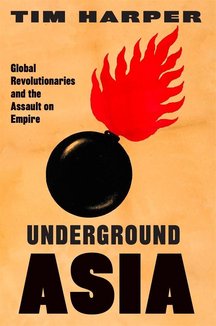
Underground Asia: Global Revolutionaries and the Assault on Empire
Author:
Tim Harper
Cundill Prize Finalist An Economist Best Book of the Year A Financial Times Best Book of the Year “Superbly original…Breaks new ground by showing how a collective consciousness emerged among revolutionaries.” ― The Economist “A clearly written, brilliantly researched examination of the people and movements that shaped Asia’s course in the 20th century and continue to influence the continent today.” ―Walter Russell Mead, Wall Street Journal “The most gripping work of history I have ever read. It is a truly profound meditation on the struggles for freedom that shaped modern Asia…a flat out literary masterpiece.” ―Sunil Amrith, author of Unruly Waters European empires had not yet reached their zenith when Asian radicals planted the seeds of their destruction.
Cundill Prize Finalist An Economist Best Book of the Year A Financial Times Best Book of the Year “Superbly original…Breaks new ground by showing how a collective consciousness emerged among revolutionaries.” ― The Economist “A clearly written, brilliantly researched examination of the people and movements that shaped Asia’s course in the 20th century and continue to influence the continent today.” ―Walter Russell Mead, Wall Street Journal “The most gripping work of history I have ever read. It is a truly profound meditation on the struggles for freedom that shaped modern Asia…a flat out literary masterpiece.” ―Sunil Amrith, author of Unruly Waters European empires had not yet reached their zenith when Asian radicals planted the seeds of their destruction. They gained energy and recruits after the Bolshevik Revolution, which sparked visions of a free and radically equal world. Thanks to cheap printing presses and the new possibility of international travel, these utopian revolutionaries built clandestine webs of resistance from London and Paris to Calcutta, Bombay, Hanoi, and Shanghai. Tim Harper takes us into this shadowy world, following the interconnected lives of Asian Marxists, anarchists, and nationalists such as M. N. Roy, Ho Chi Minh, and Tan Malaka. Underground Asia shows for the first time how these national liberation movements crucially depended on global action and reveals how these insurgencies shape the region to this day.
Find this book on:
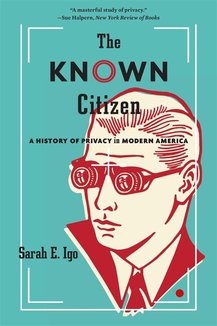
The Known Citizen: A History of Privacy in Modern America
Author:
Sarah E. Igo
A Washington Post Book of the Year Winner of the Merle Curti Award Winner of the Jacques Barzun Prize Winner of the Ralph Waldo Emerson Award “A masterful study of privacy.” ―Sue Halpern, New York Review of Books “Masterful (and timely)…[A] marathon trek from Victorian propriety to social media exhibitionism…Utterly original.” ― Washington Post Every day, we make decisions about what to share and when, how much to expose and to whom. Securing the boundary between one’s private affairs and public identity has become an urgent task of modern life.
A Washington Post Book of the Year Winner of the Merle Curti Award Winner of the Jacques Barzun Prize Winner of the Ralph Waldo Emerson Award “A masterful study of privacy.” ―Sue Halpern, New York Review of Books “Masterful (and timely)…[A] marathon trek from Victorian propriety to social media exhibitionism…Utterly original.” ― Washington Post Every day, we make decisions about what to share and when, how much to expose and to whom. Securing the boundary between one’s private affairs and public identity has become an urgent task of modern life. How did privacy come to loom so large in public consciousness? Sarah Igo tracks the quest for privacy from the invention of the telegraph onward, revealing enduring debates over how Americans would―and should―be known. The Known Citizen is a penetrating historical investigation with powerful lessons for our own times, when corporations, government agencies, and data miners are tracking our every move. “A mighty effort to tell the story of modern America as a story of anxieties about privacy…Shows us that although we may feel that the threat to privacy today is unprecedented, every generation has felt that way since the introduction of the postcard.” ―Louis Menand, New Yorker “Engaging and wide-ranging…Igo’s analysis of state surveillance from the New Deal through Watergate is remarkably thorough and insightful.” ― The Nation
Find this book on:
Episode overview
Our politics are increasingly divided on fundamental issues like the legitimacy of elections and the nature and integrity of the basic systems of American government. That’s the most important fact of this election. But strange new zones of agreement have been emerging, too — on China, outsourcing and health care. What should we make of that?
In his book “The Rise and Fall of the Neoliberal Order” the historian Gary Gerstle describes these shifts in consensus in terms of political orders — these eras that stretch for decades, when both parties come to accept a certain set of ideas. In this conversation he walks me through the political, economic and social factors that shaped two political orders in the last century: the New Deal order and the neoliberal order. And we apply this lens to what’s happening in our politics right now.
It may seem strange to take a step back in time right before the election. But I think Gerstle’s framework helps uncover an overlooked dimension of the 2024 race and where politics might go next.