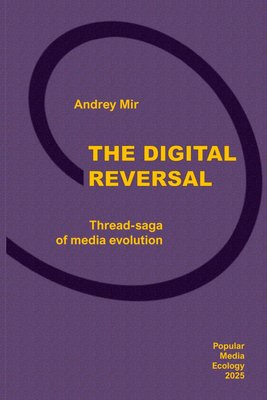


There are a lot of generic and unfocused “it’s the phones!” takes out there. In my opinion, Andrey Mir is the closest to offering a comprehensive, scientific characterization of society’s relationship to media. – Joseph Weisenthal, Bloomberg Andrey Mir’s The Digital Reversal , building on his recent series of books with pathbreaking analyses, is so far ahead of any other scholarly work in understanding what's going on in the media world, and hence the world per se, today, that it hurts even as it brilliantly elucidates. You want to know where we are and perhaps what to do? Read The Digital Reversal . – Paul Levinson, author of McLuhan in an Age of Social Media The future of the book is the blurb, said Marshall McLuhan. As the future arrives, this book is written in tweets—1,295 of them. Gathered in thread-chapters, they explore and explain what media evolution does to us. Cars help people get around faster. But when their use hits certain limits, their effect of speed and mobility reverses into traffic jams. And so it is with any medium: when it reaches its extremes or limits, it reverses its effect into the opposite. This is what we face now. Digital media have sped up human interaction with the world to its limit—instantaneity. No wonder everything is now reversing into its opposite, merging into one global, cataclysmic Digital Reversal. The abundance of signals reverses into noise. The abundance of facts reverses into fakes. Free access to self-expression leads to abuse by trolls and bad actors and reverses into censorship. The revolt of the public reverses into anarcho-tyranny. Text reverses into texting, and texting reverses print literacy into digital orality. Abstraction reverses into anecdotal evidence. Feelings reverse into intensities. Boosted by the overload of empathy, identity reverses into credentials. Journalism reverses into postjournalism. The overload of news reverses into news avoidance. Reading books reverses into asking the search box. Knowledge reverses into knowing. Academia flips into activism. Objective truth reverses into crowdsourced importance. Everything is media effects. In the digital era, the study of media effects is the study of reversals. Reversals are everywhere. Like verses in a saga, 1,295 tweets across 248 pages cover the development of media from orality to literacy and now in reverse—to digital orality. Also read other books by Andrey Mir — available on Amazon: - The Viral Inquisitor and Other Essays on Postjournalism and Media Ecology (2024) - Digital Future in the Rearview Mirror: Jaspers’ Axial Age and Logan’s Alphabet Effect (2024) - Postjournalism and the Death of Newspapers: The Media After Trump: Manufacturing Anger and Polarization (2020) - Human as Media: The Emancipation of Authorship (2014)
Recommended on 1 episode:
-
📕
Orality and Literacy (New Accents)
by
Walter J. Ong
-
📘
North Woods: A Novel
by
Daniel Mason

-
📗
Breakneck: China's Quest to Engineer the Future
by
Dan Wang

-
📙
A Marriage at Sea: A True Story of Love, Obsession, and Shipwreck
by
Sophie Elmhirst

-
📕
The Digital Reversal. Thread-saga of media evolution
by
Andrey Mir
-
📘
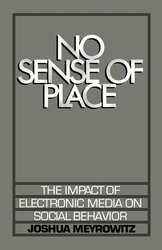
No Sense of Place: The Impact of Electronic Media on Social Behavior
by
Joshua Meyrowitz